Fear of Finding Out (FOFo): Meaning, Causes & How to Overcome It
Explore the concept of FOFo (Fear of Finding Out), a growing psychological phenomenon rooted in avoidance and anxiety. Understand how it differs from FOMO, key factors that trigger it, and evidence-based strategies to overcome this behaviour for better mental well-being.
Fear of Finding Out (FOFo): Definition, Difference from FOMO, Causes & Solutions
In an era of heightened mental health awareness, a new psychological phenomenon is gaining recognition: FOFo, or the Fear of Finding Out.
What is FOFo?
FOFo, an acronym for the “Fear of Finding Out,” is a psychological barrier that prevents individuals from seeking out information due to the anxiety of what that information might reveal. It is a form of avoidance behaviour where temporary ignorance is preferred over the potential distress of confronting a problem.
- Origin: The term first emerged in medical contexts to describe patients who avoided crucial health screenings due to the dread of receiving a bad or embarrassing diagnosis.
- Manifestation: Beyond healthcare, FOFo now applies to various aspects of life, including:
- Financial: Avoiding opening bank statements or checking credit scores.
- Professional: Delaying opening critical emails or avoiding constructive feedback.
- Personal: Postponing difficult conversations in relationships or ignoring legal notices.
How is it different from FOMO?
While both are anxiety-based, FOMO and FOFo are driven by opposing impulses.
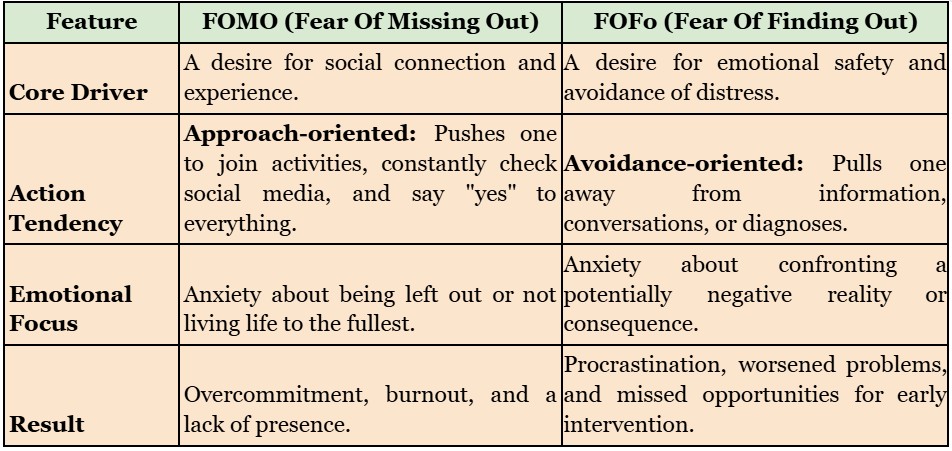
What are the factors that lead to FOFo?
FOFo is primarily fueled by anxiety and several specific psychological factors:
- Desire for Control: Avoiding information provides an illusion of control over an uncertain situation, offering immediate, though fleeting, relief from anxiety.
- Past Negative Experiences: A previous bad experience, such as a traumatic medical diagnosis or a harsh feedback session, can condition a person to avoid similar situations.
- Coping Underestimation: Individuals often underestimate their own ability to cope with bad news, believing they will be unable to handle the outcome.
- Stigma and Shame: The fear of a result that carries social stigma (e.g., certain medical conditions or financial failure) can be a powerful motivator for avoidance.
- Generalised Anxiety: Underlying anxiety disorders, such as iatrophobia (fear of doctors) or general anxiety, can manifest as FOFo across multiple life domains.
What makes a person come out of it?
Overcoming FOFo involves conscious cognitive and behavioural strategies that shift focus from short-term fear to long-term well-being.
- Cost-Benefit Analysis: Objectively weighing the long-term pros (early intervention, peace of mind, problem-solving) against the short-term cons (temporary anxiety) of knowing the information.
- Self-Reflection: Asking value-based questions like, “What will happen if I keep avoiding this?”, “Is this fear making my decisions for me?”, and “How will I feel about this a year from now?”
- Reappraising Coping Ability: Challenging the belief that one cannot handle bad news. Recognising personal resilience and past successes in managing difficult situations builds confidence.
- Focus on Values: Shifting the focus from fear to living in alignment with one’s values, such as responsibility for one’s health, financial integrity, or commitment to relationships. As expert Lynn Bufka states, “Facing the fear helps us make choices that are more in line with our values.”
Subscribe to our Youtube Channel for more Valuable Content – TheStudyias
Download the App to Subscribe to our Courses – Thestudyias
The Source’s Authority and Ownership of the Article is Claimed By THE STUDY IAS BY MANIKANT SINGH