Font size:
Print
DRDO Successfully Tests Indigenous Fighter Escape System
DRDO Successfully Tests Indigenous Fighter Escape System
Context: The Defence Research and Development Organisation (DRDO) successfully conducted a high-speed rocket sled test of an indigenous fighter aircraft escape system.
About:
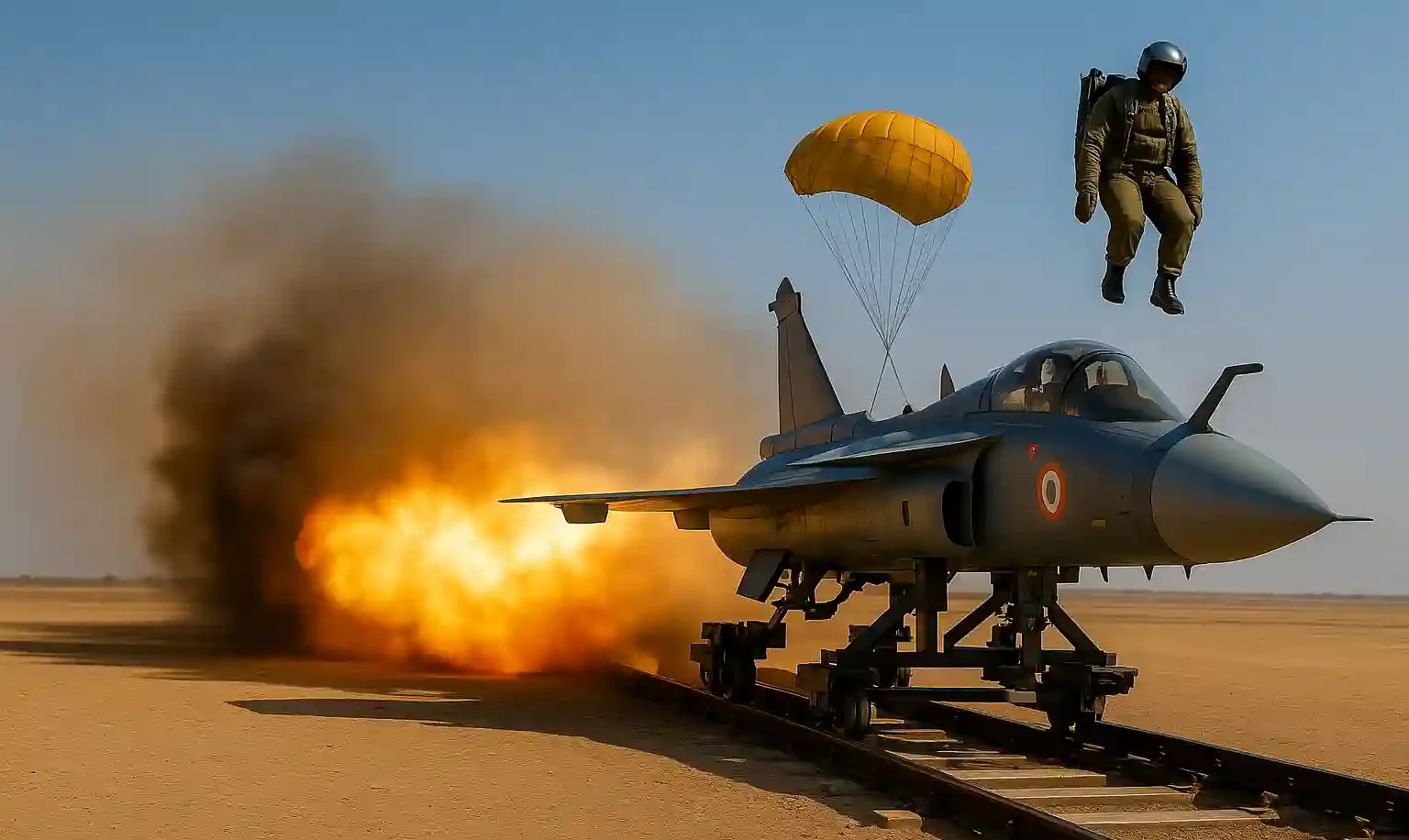
- The DRDO successfully conducted a high-speed rocket sled test of an indigenous fighter aircraft escape system at the Rail Track Rocket Sled facility in Chandigarh.
- The test validated critical aspects of pilot safety:
- Canopy severance (breaking open the cockpit canopy for ejection).
- Ejection sequencing (timing and coordination of the ejection process).
- Aircrew recovery (ensuring safe landing of the pilot).
- The trial was carried out with Aeronautical Development Agency (ADA) and Hindustan Aeronautics Limited (HAL), using a dual sled system fitted with the Light Combat Aircraft (LCA) forebody.
Why is it Significant?
- Pilot safety assurance: Validating ejection systems ensures that fighter pilots can safely escape during emergencies, a cornerstone of air combat survivability.
- Advanced testing capability: India now joins a select group of nations with dynamic ejection testing infrastructure, moving beyond static trials to realistic, high-speed simulations.
- Indigenous development: Strengthens India’s self-reliance in defence technology, reducing dependence on foreign systems for critical safety equipment.
- Operational readiness: Enhances confidence in indigenous platforms like the Light Combat Aircraft (Tejas) and future fighter programs.
- Technological complexity: Dynamic ejection tests are far more challenging than static ones, requiring precise control of velocity, sequencing, and canopy fragilisation — showcasing India’s growing R&D maturity.
- Strategic milestone: Demonstrates India’s ability to design, test, and certify life-saving systems domestically, aligning with the broader vision of Atmanirbhar Bharat (self-reliant India).
Subscribe to our Youtube Channel for more Valuable Content – TheStudyias
Download the App to Subscribe to our Courses – Thestudyias
The Source’s Authority and Ownership of the Article is Claimed By THE STUDY IAS BY MANIKANT SINGH