RBI Rate Cut & Monetary Policy: Inflation vs Growth Dilemma
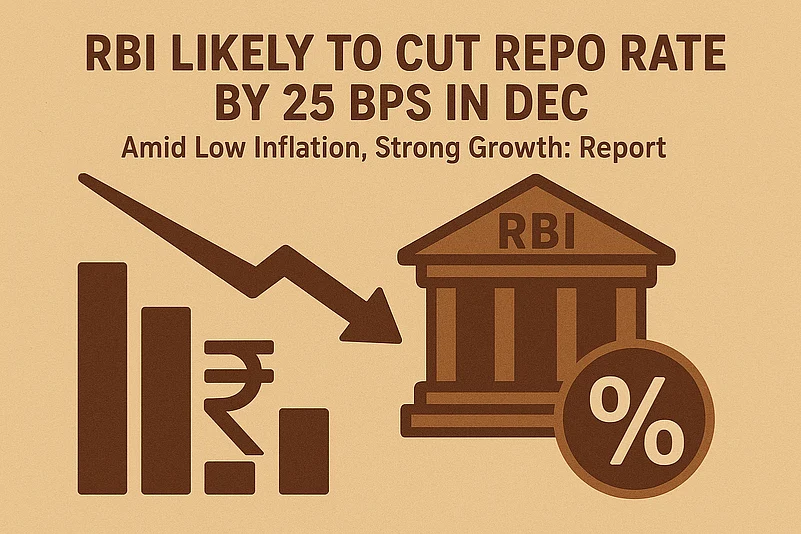
Context :In its recent meeting, the Reserve Bank of India’s Monetary Policy Committee (MPC) reduced the Repo Rate by 25 basis points (bps). This decision came at a time of record-low retail inflation and growing signs of caution regarding future economic growth. The move signals a clear reorientation of Monetary Policy toward growth support, even as inflation remains under firm control.
The Peculiar Economic Situation
The recent meeting of the Monetary Policy Committee (MPC) was held under an unusual economic backdrop, making policy calibration particularly challenging. On one hand, India recorded robust real GDP growth of 8.2% in Q2, with agriculture, manufacturing, and services all showing strength. On the other hand, several warning signals began to emerge.
Retail inflation has remained well below the RBI’s target of 4% ± 2% since February, averaging close to 2% for the year. Importantly, the decline in inflation has been broad-based, indicating muted price pressures across sectors. However, nominal GDP growth has lagged expectations, falling short of Budget assumptions. In addition, goods exports declined in October, pointing to weakening external demand.
Complicating matters further, the Indian rupee depreciated sharply, breaching the 90 mark against the US dollar, which typically constrains accommodative Monetary Policy due to imported inflation risks.
Rationale Behind the Rate Cut
Despite currency pressures, the MPC opted for a 25 basis point cut, using the low-inflation environment to support growth momentum. The decision reflects a strategic shift in Monetary Policy orientation—from inflation control to growth support.
1. Elevated Real Repo Rate
With inflation subdued, the real repo rate (nominal rate minus inflation) stood at a relatively high ~1.25% on a forward-looking basis. The rate cut lowers real interest rates, making borrowing cheaper, thereby encouraging investment and consumption, key drivers of economic growth.
2. Compensating for Limited Fiscal Space
The government’s ability to stimulate the economy through fiscal measures is constrained following recent tax cuts and consolidation efforts. As a result, Monetary Policy has become the primary counter-cyclical tool. The RBI’s move signals its readiness to shoulder the responsibility of growth support amid external and fiscal headwinds.
Policy Imperatives and the Way Forward
The success of the rate cut hinges on complementary actions by both the RBI and the government.
1. Liquidity and Transmission
The RBI must ensure adequate liquidity in the banking system so that the accommodative stance of Monetary Policy is not undermined. Equally crucial is effective transmission, ensuring that banks pass on lower policy rates to borrowers through reduced lending rates.
2. Close Monitoring of Growth Trends
The RBI’s projections indicate a moderation in growth to 7% in Q3 and 6.5% in Q4. Going forward, Monetary Policy decisions will depend less on inflation—which remains benign—and more on actual growth outcomes vis-à-vis these cautious forecasts.
Conclusion
The RBI’s 25 bps rate cut reflects a deliberate recalibration of Monetary Policy to prioritise growth while inflation remains firmly under control. With limited fiscal manoeuvring room, the MPC has emerged as the key institution supporting economic momentum. However, for sustained growth, rate cuts must translate into lower lending rates, be supported by stable global demand, and complemented by prudent fiscal management.
Subscribe to our Youtube Channel for more Valuable Content – TheStudyias
Download the App to Subscribe to our Courses – Thestudyias
The Source’s Authority and Ownership of the Article is Claimed By THE STUDY IAS BY MANIKANT SINGH