SIR and the Annihilation of Rights: Analyzing the Controversy over Electoral Roll
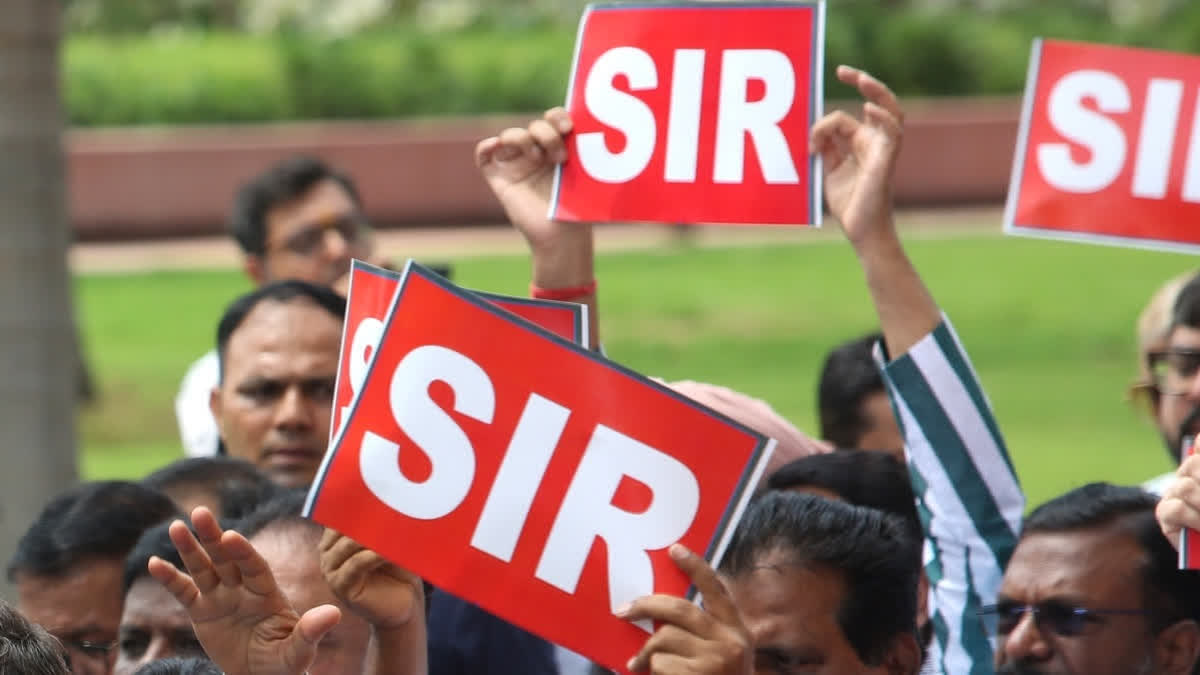
Context : The opinion article critiques the Special Intensive Revision (SIR) of electoral rolls initiated by the Election Commission of India (ECI) in several states, arguing that the process imposes an excessive burden of proof on ordinary citizens, potentially leading to the arbitrary disenfranchisement and the “annihilation of rights.”
I. Context: The Special Intensive Revision (SIR)
The Special Intensive Revision refers to a special, large-scale exercise undertaken by the Election Commission of India (ECI) to cleanse and update the electoral rolls, often involving the re-verification of voters and the mandatory submission of documentation.
-
Standard Revision: The standard procedure for electoral roll revision is the Annual Summary Revision (ASR), which focuses on enrolling new voters and deleting dead/shifted voters.
-
Intensive Revision : The SIR is a more stringent process. Critics argue that while the stated goal is ensuring accuracy, the process shifts the burden of proof from the ECI/State election machinery to the individual voter, requiring them to proactively prove their identity and residence.
II. The Core Concern: ‘Annihilation of Rights’
The article argues that the nature of the SIR process structurally leads to the exclusion of legitimate voters, particularly the marginalized, thereby amounting to an “annihilation of rights.”
-
Excessive Documentation and Burden of Proof: The ECI’s authority to register a voter stems from Section 19 of the Representation of the People Act, 1950, which simply requires a person to be “ordinarily resident in a constituency.” The SIR process, however, is criticized for demanding complex or multiple documents (birth certificates, land records, etc.), which are difficult for the poor, migrant workers, nomadic communities, or those without formal documentation to produce.
-
Technocratic Exclusion: The critique compares the SIR to other administrative reforms, like mandatory Aadhaar-linking in social welfare schemes (e.g., MGNREGA), where a focus on technocratic perfection and digital verification leads to the structural codification of exclusions for those outside the formal digital and documentation ecosystem.
-
Targeting Deletion: Allegations have been made in political circles that the SIR is arbitrarily used to target and delete voters, rather than simply revising the rolls, turning a constitutional safeguard into an instrument of disenfranchisement.
III. Legal and Constitutional Implications
The controversy touches upon fundamental principles of Indian democracy and governance.
Right to Vote
-
The right to vote is a statutory right under the Representation of the People Act, 1950.
-
Despite not being a Fundamental Right, it is central to democratic participation.
-
Arbitrary deletion from electoral rolls undermines the spirit of Article 326 (Adult Suffrage).
-
Such exclusion also violates Article 14 (political equality) principles.
Due Process & Natural Justice
-
Any deletion from the voter list must follow natural justice norms.
-
This includes providing adequate notice and a fair opportunity to be heard.
-
The SIR process is criticized for being rushed and overly documentation-heavy, bypassing these safeguards.
-
Concerns rise especially in cases of large-scale or mass deletions.
Role of the Election Commission of India (ECI)
-
Under Article 324, ECI must ensure free, fair, and inclusive elections.
-
It is responsible for ensuring every eligible citizen is included in the electoral roll.
-
Critics argue SIR emphasizes “purity” of rolls over universality, weakening the ECI’s constitutional mandate of inclusion.
IV. Way Forward
Addressing the concerns requires a policy shift that balances the need for accurate rolls with the constitutional imperative of universal inclusion:
-
Re-evaluating ‘Ordinarily Resident’: The ECI must strictly adhere to the legal definition of ‘ordinarily resident’ and avoid imposing documentation requirements that are difficult for marginalized populations to meet.
-
Focus on Local Verification: The process should rely more on physical verification by Booth Level Officers (BLOs) and local community knowledge, rather than creating a technology- or document-based gatekeeping mechanism.
-
Strengthening Appeal Process: A robust, accessible, and quick grievance redressal mechanism is essential to challenge arbitrary deletions.
Subscribe to our Youtube Channel for more Valuable Content – TheStudyias
Download the App to Subscribe to our Courses – Thestudyias
The Source’s Authority and Ownership of the Article is Claimed By THE STUDY IAS BY MANIKANT SINGH