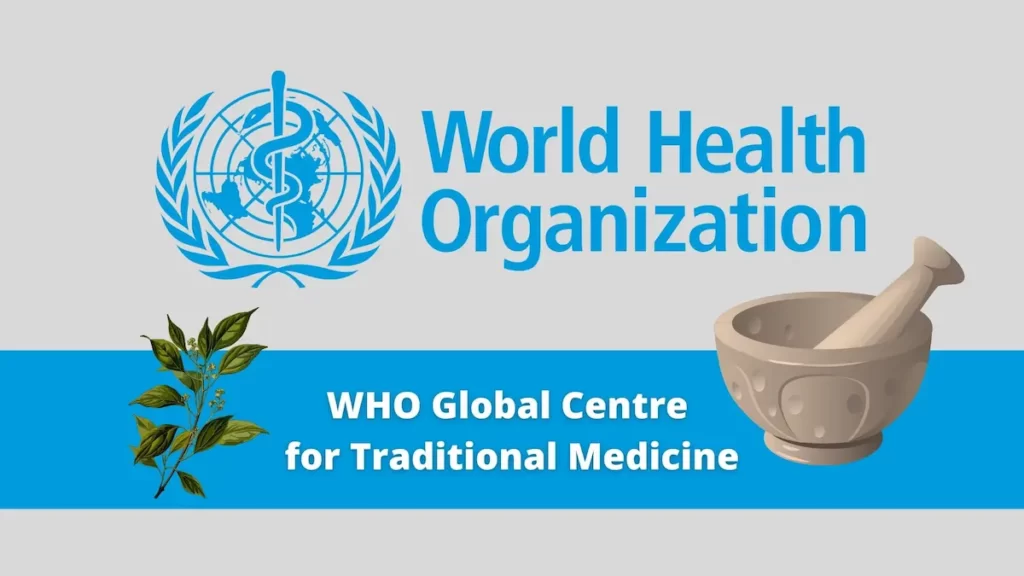
WHO Global Summit on Traditional Medicine
Context: Traditional Medicine Moves to the Global Mainstream
New Delhi is hosting the Second WHO Global Summit on Traditional Medicine from 17–19 December 2025, marking a crucial moment in the global health discourse. Jointly organised by the World Health Organisation (WHO) and India’s Ministry of Ayush, the summit builds upon the momentum created at the 2023 Gujarat Summit.
At its core, the event reflects a global realisation: traditional medicine is no longer a fringe or “alternative” practice, it is central to the future of inclusive, sustainable, and preventive healthcare.
I. Why the 2nd WHO Summit on Traditional Medicine Matters (2025)
The New Delhi summit advances the vision outlined in the Gujarat Declaration (2023) and revolves around the theme:
“Restoring Balance for People and Planet: The Science and Practice of Well-Being.”
This theme captures the dual promise of traditional medicine—human health and planetary sustainability.
1. From Alternative to Evidence-Based Healthcare
A key objective of the summit is to integrate Traditional, Complementary and Integrative Medicine (TCIM) into mainstream healthcare systems through:
-
Scientific validation
-
Standardised clinical protocols
-
Safety, quality, and efficacy benchmarks
This marks a shift from perception-based acceptance to evidence-based integration, strengthening trust among policymakers and medical professionals.
2. Launch of WHO Global Traditional Medicine Strategy (2025–2034)
One of the most significant outcomes of the summit is the unveiling of the WHO Global Traditional medicine Strategy 2025–2034.
This decade-long roadmap aims to:
-
Strengthen regulation and governance
-
Promote research and innovation
-
Support countries in safely integrating traditional medicine into national health systems
It provides global coherence to a sector used by nearly 88% of WHO member states.
3. Advancing Universal Health Coverage (UHC)
Traditional medicine is increasingly seen as a bridge for healthcare access, particularly in underserved and rural regions.
-
TCIM can complement primary healthcare
-
It supports Goal 3.8 of the SDGs—Universal Health Coverage
-
It is cost-effective, culturally accepted, and locally available
For many countries, traditional medicine is the first point of care, not a secondary option.
4. Digital Leap: Preserving Indigenous Knowledge
The summit introduces the WHO Traditional medicine Global Library (TMGL)—a digital repository designed to:
-
Document validated traditional knowledge
-
Prevent biopiracy
-
Promote global research collaboration
This digital initiative ensures that centuries-old wisdom is preserved, protected, and scientifically referenced.
II. India’s Leadership in Traditional Medicine
India has emerged as the global anchor for traditional medicine, driven by sustained institutional reforms and policy support.
1. Strong Institutional Architecture
-
Ministry of Ayush (2014): Created to give focused governance to Ayurveda, Yoga, Unani, Siddha, and Homoeopathy.
-
WHO Global Traditional Medicine Centre (GTMC): Established in Jamnagar, Gujarat (2022)—the world’s first and only WHO centre dedicated to traditional medicine.
This positions India as both a knowledge leader and a global convenor.
2. Flagship Schemes and Policy Support
India’s approach goes beyond symbolism to structural strengthening:
-
National AYUSH Mission (NAM): Enhances infrastructure, manpower, and medicine availability.
-
AYURGYAN Scheme (2021–2026): Promotes high-quality research, innovation, and academic excellence.
-
AYURSWASTHYA Yojana: Supports Centres of Excellence and advanced R&D in AYUSH systems.
Together, these initiatives aim to modernise traditional medicine without diluting its core philosophy.
3. Digital Transformation of AYUSH
India has also embraced digital health to scale traditional medicine:
-
Ayush Grid: An integrated IT platform covering healthcare delivery, education, and research.
-
A-HMIS: A dedicated Health Management Information System for AYUSH institutions, enabling data-driven governance.
This digital backbone ensures transparency, standardisation, and better patient outcomes.
III. Traditional Medicine and Planetary Health
A distinctive feature of the 2025 summit is its emphasis on planetary health.
Traditional medicine systems are deeply rooted in biodiversity and ecological balance:
-
Thousands of medicinal plant species form their backbone
-
Unsustainable harvesting poses risks to ecosystems
India’s National Medicinal Plants Board (NMPB) addresses this challenge by:
-
Promoting sustainable cultivation
-
Partnering with farmers and forest communities
-
Ensuring conservation alongside commercial demand
This aligns healthcare with environmental stewardship,an increasingly urgent global priority.
Conclusion: A New Health Paradigm
The WHO Global Summit on Traditional medicine 2025 signals a turning point. Traditional medicine is no longer positioned against modern science—it is being woven into it.
For India, the summit reinforces its role as a global leader in integrative healthcare, combining ancient wisdom, modern science, digital innovation, and sustainability.
As the world searches for resilient health systems, it offers not just treatment, but balance, prevention, and harmony between people and the planet.
Subscribe to our Youtube Channel for more Valuable Content – TheStudyias
Download the App to Subscribe to our Courses – Thestudyias
The Source’s Authority and Ownership of the Article is Claimed By THE STUDY IAS BY MANIKANT SINGH