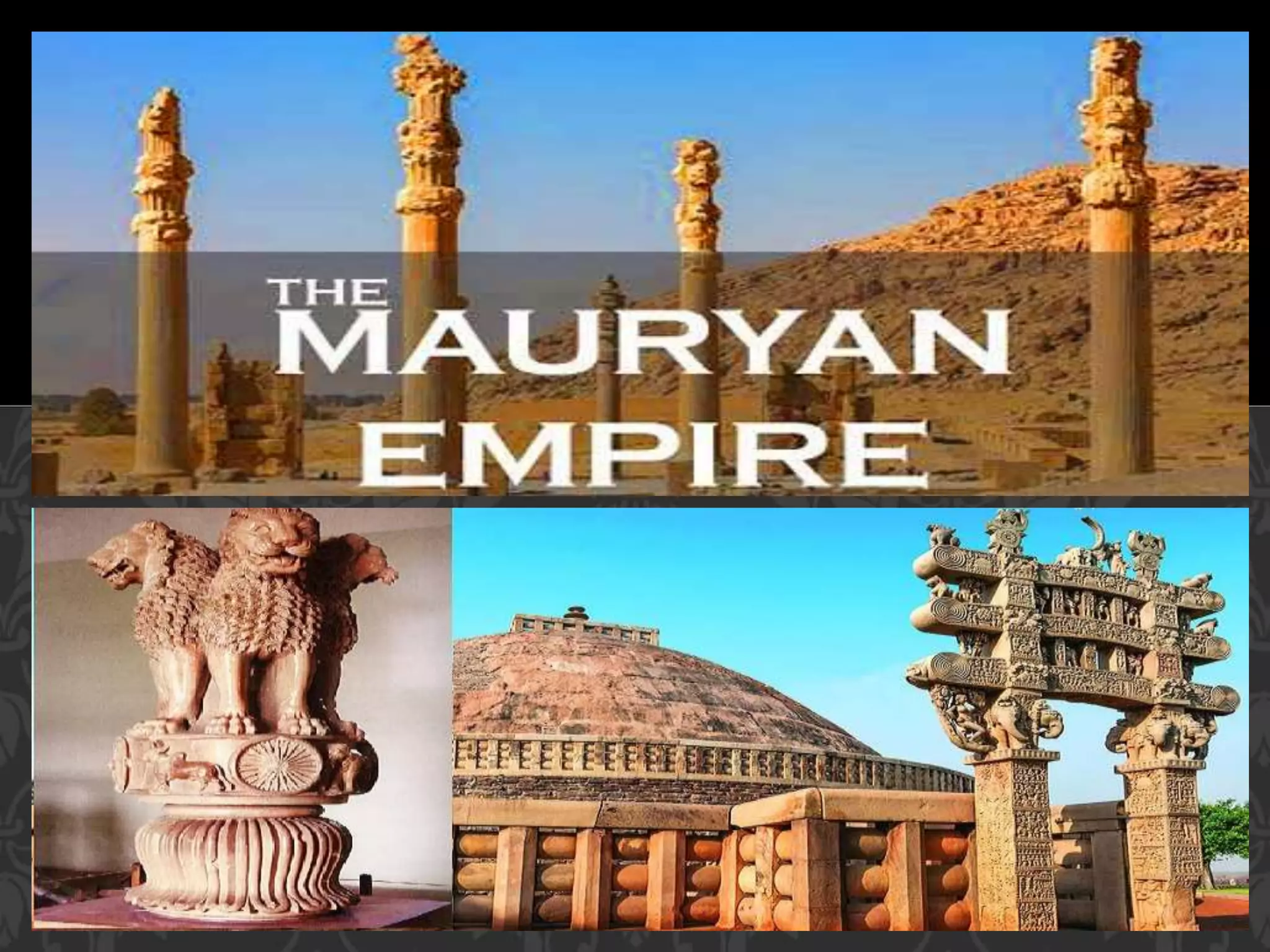
Mauryan Empire Administration System Explained for UPSC
Mauryan Empire Administration System Explained for UPSC
Introduction
The Mauryan Empire (c. 321–184 BCE) stands as a pioneering example of centralised governance in ancient India. Founded by Chandragupta Maurya with the strategic guidance of Chanakya (Kautilya), the empire brought vast regions of the Indian subcontinent under one unified administration. The Mauryan empire administration was characterised by a structured bureaucracy, well-defined responsibilities, efficient revenue collection, and tight control over urban and rural areas. By combining political authority with economic management and social welfare, it set a benchmark for ancient statecraft.
Sources for the Study of Mauryan Empire Administration
Our understanding of the Mauryan empire administration comes from multiple literary and archaeological sources:
- Arthashastra :Kautilya’s Arthashastra offers a detailed blueprint of governance, law, revenue, military strategy, and diplomacy. Though primarily normative, it reflects many practical administrative measures of the Mauryan period.
- Megasthenes’ Indica :The Greek ambassador Megasthenes provides a unique perspective on the Mauryan empire, describing the court, social structure, and administration of the capital city, Pataliputra.
- Ashokan Edicts and Archaeological Evidence: Ashoka’s inscriptions give direct evidence of governance, public welfare, and ethical administration. Archaeological findings supplement our understanding of how the Mauryan empire exercised control over its territories.
Basic Features of Mauryan Administration
Centralised Nature of the State
The Mauryan administration was highly centralised. The king occupied the supreme position in the administrative hierarchy and exercised control over all aspects of governance. Political, military, judicial, and financial authority was concentrated in the hands of the emperor. However, he was assisted by a group of ministers and officials who helped in the day-to-day functioning of the state.
The capital city, Pataliputra, served as the nerve centre of administration. From here, imperial orders were issued, revenue was collected, and officials were supervised. The centralised system ensured uniformity in administration across the empire.
Saptanga Theory of the State
The Mauryan state was guided by the Saptanga theory, which described the state as consisting of seven interrelated elements:
- Swami (King) – the supreme ruler
- Amatya (Ministers and officials) – administrative machinery
- Janapada (Territory and people) – the productive base
- Durga (Fortifications) – defence and security
- Kosha (Treasury) – financial resources
- Danda (Army and force) – maintenance of law and order
- Mitra (Allies) – diplomatic support
This concept emphasised that the strength of the state depended on the proper functioning and balance of all its components.
Central Administration
-
The King
The Mauryan king was the head of the state and government. He was regarded as the protector of his subjects and was expected to ensure their welfare. His main duties included maintaining internal order, defending the empire, collecting revenue, administering justice, and promoting economic prosperity.
The king was accessible to his subjects and actively involved in governance. Ashoka, in particular, emphasised the idea that the happiness of the people was directly linked to the well-being of the ruler.
-
Council of Ministers
The king was assisted by a Council of Ministers (Mantriparishad). This body included senior officials who advised the ruler on important matters of state. The council discussed issues related to administration, military campaigns, revenue, and foreign relations.
Important members of the council included:
- Mantri – chief minister
- Purohita – chief priest and moral adviser
- Senapati – commander-in-chief of the army
- Yuvaraja – crown prince
- Amatyas – senior officials handling various departments
Appointments were generally based on merit, loyalty, and competence, and officials were closely supervised to prevent corruption.
-
High Central Officials
Several key officials were responsible for managing the central administration:
- Samaharta – chief revenue officer responsible for assessment and collection of taxes
- Sannidhata – custodian of the treasury
- Bhandagarika – superintendent of royal stores
- Durgapala – officer in charge of forts
- Akaradhyaksha – superintendent of mines
Each department was headed by an Adhyaksha (superintendent), indicating a high degree of specialisation in administration.
Provincial Administration
Given the vast size of the Mauryan Empire, direct rule from the centre was not always feasible. Therefore, the empire was divided into provinces to ensure efficient administration.
-
Structure of Provinces
The empire was divided into four to five major provinces, each with a prominent administrative centre. These provinces were governed by Kumaras (royal princes) or trusted officials known as Aryaputras. This system ensured loyalty to the central authority and minimised the risk of rebellion.
Each provincial governor was assisted by a group of officials who managed revenue collection, law and order, and judicial matters. Regular inspections and reporting ensured accountability.
-
Provincial Officials
Important provincial officials included:
- Pradeshikas – inspectors who toured districts to supervise administration
- Mahamatras – senior officers assisting the governor
- Rajukas – district-level officials with judicial and revenue powers
- Yuktas – subordinate officials responsible for record-keeping
This hierarchical system helped maintain effective control over distant regions.
District Administration
Below the provincial level, the empire was divided into districts (Ahara). The Rajuka was the most important district officer. He was responsible for:
- Assessment and collection of revenue
- Administration of justice
- Maintenance of law and order
The Rajuka enjoyed considerable authority but was accountable to higher officials. He was assisted by Yuktas and clerical staff who maintained records.
Urban Administration
Mauryan cities were carefully administered due to their economic and strategic importance. Each city was governed by an official known as the Nagarika, who was responsible for urban administration.
According to accounts of the capital city, urban administration was divided among six committees, each dealing with specific functions such as:
- Regulation of industries and crafts
- Supervision of trade and markets
- Registration of births and deaths
- Management of foreigners
- Collection of taxes
- Maintenance of public order
This reflects the advanced level of urban governance during the Mauryan period.
Village Administration
The village was the basic unit of administration. Villages enjoyed a certain degree of autonomy in managing local affairs. The Gramani (village headman) played a key role in:
- Collection of taxes
- Settlement of minor disputes
- Coordination between villagers and the state
Village elders and councils assisted the headman. Officials such as Gopa and Sthanika supervised groups of villages and maintained land and population records.
Revenue Administration
-
Land Revenue
Land revenue was the principal source of state income. A fixed portion of agricultural produce, generally one-sixth, was collected as tax. The state also levied taxes on trade, crafts, mines, forests, and tolls.
Revenue assessment was systematic, and officials ensured regular collection to maintain the financial stability of the empire.
-
State Control over Economy
The Mauryan state exercised extensive control over economic activities. Important industries such as mining, metalwork, and arms manufacturing were state monopolies. Trade was regulated through standardised weights and measures, and prices were supervised to prevent exploitation.
Judicial Administration
Justice was administered through a well-defined system. The king was the highest court of appeal. Below him were courts dealing with civil and criminal cases.
- Dharmasthiya courts handled civil disputes
- Criminal courts dealt with offences and punishments
The concept of Danda (punishment) was central to maintaining social order. Judges and officials were expected to act impartially, and punishments were meant to deter wrongdoing.
Police and Espionage System
The Mauryan state maintained a strong police system to ensure internal security. Officers were responsible for maintaining peace, guarding roads, and preventing crime.
An elaborate espionage network functioned under the state. Spies, both stationary and mobile, kept the king informed about public opinion, official conduct, and potential threats. This system helped maintain stability and prevent rebellions.
Welfare Measures and Public Works
The Mauryan administration was not limited to revenue and control; it also emphasised public welfare. The state undertook the construction of roads, wells, rest houses, and irrigation works. Medical facilities were established for both humans and animals.
Under Ashoka, special officers known as Dhamma Mahamatras were appointed to promote social harmony, moral conduct, and the welfare of various social groups. These measures reflect the ethical dimension of Mauryan governance.
Conclusion
The Mauryan administrative system was one of the most advanced and comprehensive systems of governance in ancient India. Its centralised authority, organised bureaucracy, efficient revenue system, and emphasis on welfare ensured stability and prosperity across a vast empire. The integration of political power with moral responsibility, especially during Ashoka’s reign, gave the Mauryan state a distinctive character. The administrative principles developed during this period laid the foundation for future empires and remain a significant chapter in India’s political history.
Subscribe to our Youtube Channel for more Valuable Content – TheStudyias
Download the App to Subscribe to our Courses – Thestudyias
The Source’s Authority and Ownership of the Article is Claimed By THE STUDY IAS BY MANIKANT SINGH