Strengthening the BWC at 50: India’s Strategic Opportunity
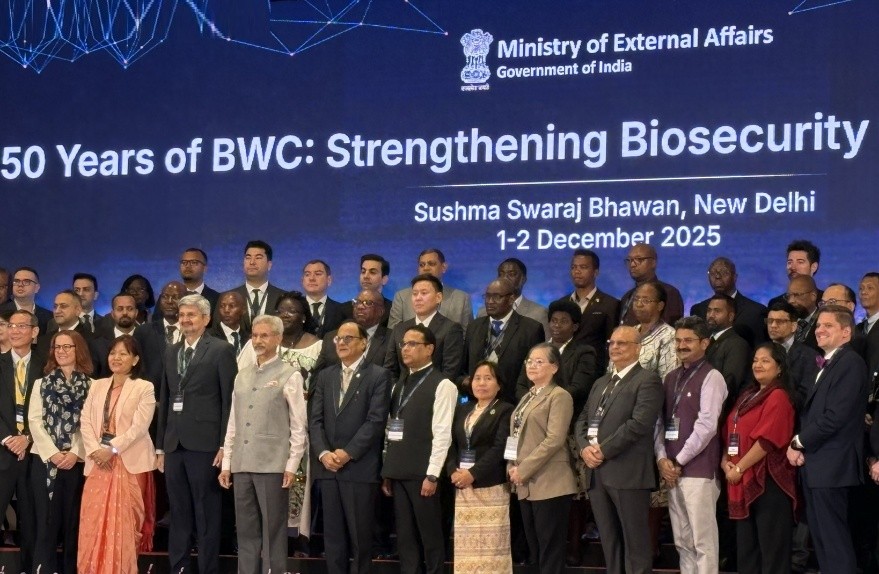
Context: As the Biological Weapons Convention (BWC) marks its 50th anniversary in 2025, India hosted a high-level international conference in New Delhi focusing on “Strengthening Biosecurity for the Global South”.
What is the Australia Group?
- The Australia Group is an informal, consensus-based multilateral export control arrangement established in 1985, following the use of chemical weapons in the Iran–Iraq War.
- It brings together 42 members and the European Union to harmonise national export controls on chemical and biological agents, dual-use equipment, and related technologies that could contribute to chemical or biological weapons programmes.
- It is not a treaty-based body and has no verification or enforcement arm. Instead, it operates through common control lists, information-sharing, and best-practice guidelines, leaving implementation to national laws. India became a member in 2018, reflecting its growing credibility in non-proliferation governance.
Why is it significant?
The Australia Group is significant because it operationalises non-proliferation in areas where formal treaties such as the Biological Weapons Convention(BWC) lack verification mechanisms. By tightening export scrutiny, it addresses the “dual-use dilemma”—where legitimate life-science research or industrial equipment can be misused for hostile purposes.
For India, membership has three strategic implications:
- Normative credibility: It strengthens India’s standing as a responsible stakeholder, especially among the Global South, complementing its long-standing diplomatic support for the BWC.
- Technology governance: It enables India to align domestic controls with evolving risks from synthetic biology, gene editing and AI-enabled research, a concern flagged in recent Economic Survey discussions on emerging technologies and regulation.
- Capacity building: India can leverage Australia Group practices to assist developing countries in improving biosafety and biosecurity without restricting peaceful access—crucial for public health and agriculture.
Has it proved to be an effective organisation?
The Australia Group has been partially effective. Its control lists and coordination have raised the cost and difficulty of acquiring sensitive biological materials, especially for non-state actors. According to assessments referenced by UNODA, export controls have complemented treaty-based regimes by plugging practical enforcement gaps.
However, limitations remain:
- Selective membership fuels perceptions of a “technology club”, leading to mistrust among non-members.
- Rapid scientific advances outpace static control lists, reducing long-term effectiveness.
- No legal enforceability means outcomes depend entirely on national implementation quality.
Despite these constraints, its value lies in risk reduction rather than elimination—making it a crucial but insufficient pillar of global biosecurity.
Subscribe to our Youtube Channel for more Valuable Content – TheStudyias
Download the App to Subscribe to our Courses – Thestudyias
The Source’s Authority and Ownership of the Article is Claimed By THE STUDY IAS BY MANIKANT SINGH