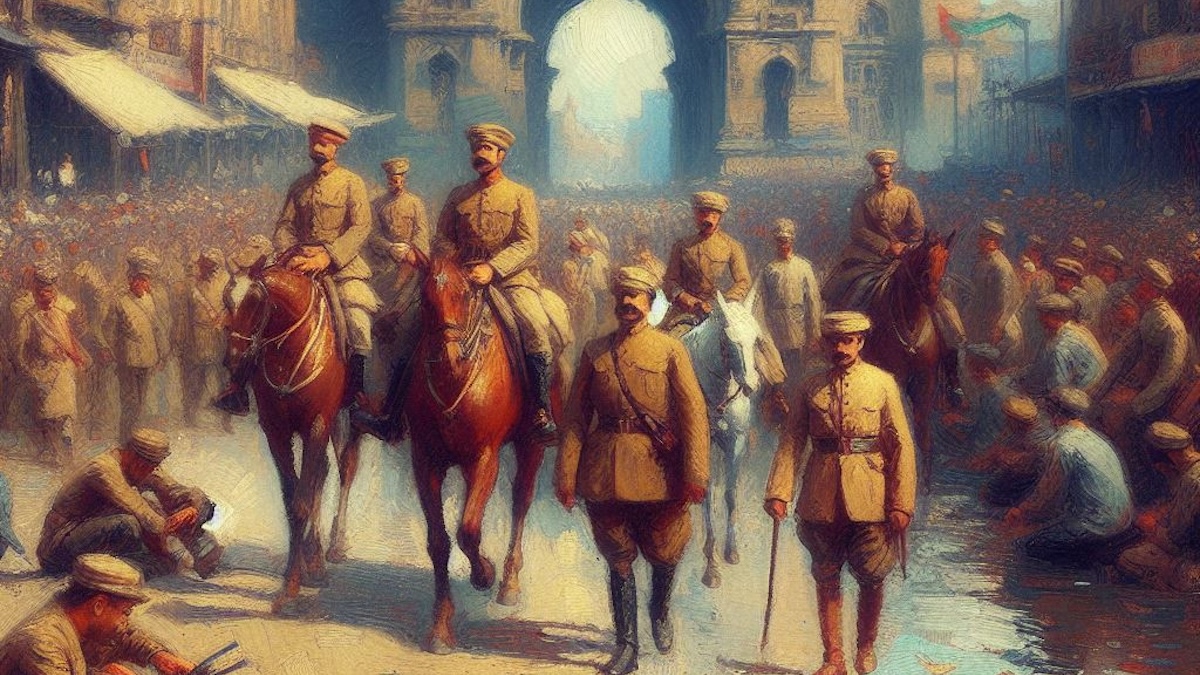
Revolt of 1857: Causes, Leaders & Failure Reasons
Revolt of 1857: Causes, Leaders & Failure Reasons
The Revolt of 1857 was one of the most significant events in the history of modern India. It represented the first widespread and organised challenge to British colonial rule. Although it did not succeed in overthrowing British authority, the revolt exposed the deep-rooted dissatisfaction among various sections of Indian society. It forced the British to reassess their policies and marked a turning point in the nature of colonial administration. In later years, Indian nationalists described it as the First War of Independence, emphasising its importance in the long struggle against foreign domination.
Background to the Revolt of 1857
By the middle of the nineteenth century, the British East India Company had established its control over a large part of India. This expansion was achieved through wars, treaties, and administrative policies that systematically weakened Indian political institutions. Traditional rulers were removed, administrative systems were altered, and economic resources were reorganised to benefit British interests. These changes disrupted the existing social and economic order and created widespread resentment.
The Company’s administration affected not only rulers and nobles but also peasants, artisans, soldiers, and religious leaders. Heavy taxation, declining industries, and cultural interference led to increasing unrest. The Indian soldiers, who formed the backbone of the British army in India, were also dissatisfied due to discriminatory treatment. All these factors together created a situation in which even a small incident could trigger a major uprising.
Political Causes of Revolt of 1857
The political policies of the British were one of the most important causes of the revolt. The East India Company followed an aggressive policy of expansion that disregarded Indian traditions of sovereignty and succession.
One of the most resented policies was the Doctrine of Lapse. According to this policy, if an Indian ruler died without a natural male heir, his kingdom was annexed by the British. Many rulers who had adopted heirs according to Indian customs found their states taken over. This policy led to the annexation of several states and created deep insecurity among Indian princes. Rani Lakshmi Bai of Jhansi, whose adopted son was denied recognition, became one of the most prominent leaders of the revolt as a result of this policy.
Another major political cause was the annexation of Awadh in 1856. The British justified this annexation on the grounds of misgovernance, but the decision deeply offended Indian sentiment. Awadh was a prosperous region with a long history of cultural and political significance. Its annexation displaced the Nawab, his court, soldiers, and landholders. Since a large number of sepoys in the British army came from Awadh, this action directly affected the army and contributed significantly to the revolt.
The British also showed little respect for traditional rulers and symbols of authority. The Mughal emperor Bahadur Shah Zafar was reduced to a mere pensioner, and his successors were told they would not be allowed to live in the Red Fort. Such actions undermined the prestige of long-established dynasties and convinced many Indians that the British intended to eliminate all traces of indigenous political authority.
Economic Causes of Revolt of 1857
British economic policies caused immense hardship to large sections of Indian society and played a crucial role in the outbreak of the revolt.
The land revenue systems introduced by the British placed a heavy burden on peasants. Under these systems, revenue demands were fixed at high levels and had to be paid in cash. Failure to pay revenue often resulted in the confiscation of land. Peasants were forced to borrow money from moneylenders, leading to chronic indebtedness and loss of land. This created widespread rural distress and resentment against British rule.
At the same time, traditional Indian industries suffered due to British economic policies. The import of cheap, machine-made goods from Britain destroyed Indian handicrafts and cottage industries. Skilled artisans lost their livelihoods and were forced into poverty. This decline of indigenous industries affected not only craftsmen but also traders and urban workers, increasing discontent across society.
Another important factor was the drain of wealth from India to Britain. A significant portion of Indian revenue was transferred to Britain in the form of profits, salaries, pensions, and administrative expenses. This constant outflow of wealth weakened the Indian economy and enriched Britain, further intensifying Indian resentment towards colonial rule.
Military Causes of Revolt of 1857
The Indian sepoys were central to the revolt, and their grievances formed a crucial cause of the uprising.
Indian soldiers faced widespread discrimination in the army. They were paid less than European soldiers and were denied opportunities for promotion to higher ranks. Indian sepoys were also subjected to racial insults and harsh discipline, which affected their morale and sense of dignity.
The General Service Enlistment Act of 1856 added to their discontent. This law required Indian soldiers to serve overseas if ordered. For many Indian sepoys, crossing the sea was believed to result in the loss of caste and social status. This act was seen as a direct attack on their religious beliefs.
The immediate cause of the revolt was the introduction of the Enfield rifle. The cartridges used in this rifle were believed to be greased with cow and pig fat. Since soldiers had to bite open the cartridges, this practice offended both Hindu and Muslim religious sentiments. Despite official assurances, the damage had already been done. The incident confirmed the sepoys’ fears that the British were deliberately trying to interfere with their religion.
Social and Religious Causes of Revolt of 1857
British social and religious policies also contributed to the revolt. Many Indians believed that British rule threatened their traditional way of life.
The introduction of Western education and social reforms, such as the abolition of sati and the promotion of widow remarriage, was viewed with suspicion. While these measures were progressive in intent, they were often imposed without considering Indian sensibilities. Conservative sections of society saw them as attempts to undermine Indian customs and traditions.
Christian missionary activities further heightened religious fears. Missionaries openly criticised Indian religions and actively sought conversions. This created the impression that the British government supported these efforts and intended to spread Christianity in India. Such fears united people of different religions against British rule.
Outbreak and Spread of the Revolt
The revolt began on 10 May 1857 at Meerut, where Indian soldiers refused to use the greased cartridges and rebelled against their British officers. The rebels then marched to Delhi, where they declared Bahadur Shah Zafar as the emperor of India. This act gave the revolt a symbolic leadership and legitimacy.
From Delhi, the revolt spread rapidly to other parts of northern and central India. Important centres of rebellion included Kanpur, Lucknow, Jhansi, and parts of Bihar. In these regions, sepoys were joined by local rulers, landlords, peasants, and townspeople. For a brief period, British authority collapsed in many areas.
Major Leaders of the Revolt of 1857
The Revolt of 1857 did not have a single leader, but several individuals emerged as prominent figures in different regions.
Bahadur Shah Zafar became the symbolic leader of the revolt. Although he was old and lacked real power, his name inspired unity among the rebels. His association gave the revolt a national character.
Rani Lakshmi Bai of Jhansi played a heroic role in resisting British forces. She fought bravely to protect her kingdom and became a symbol of courage and sacrifice. Her leadership inspired both soldiers and civilians.
Nana Sahib led the revolt in Kanpur. He was the adopted son of the last Peshwa and sought to restore Maratha authority. Begum Hazrat Mahal played a leading role in Lucknow, organising resistance after the annexation of Awadh. Kunwar Singh, a zamindar from Bihar, led guerrilla warfare against the British despite his old age.
Reasons for the Failure of the Revolt of 1857
Despite its widespread nature, the Revolt of 1857 failed due to several important reasons.
One major reason was the absence of centralised leadership. The revolt was led by different leaders in different regions, each pursuing local objectives. There was no unified command or coordinated strategy to guide the movement as a whole.
The revolt was also limited in its geographical spread. It mainly affected northern and central India, while large parts of southern, western, and eastern India remained unaffected or loyal to the British. This limited the strength and impact of the uprising.
Another significant weakness was the lack of a common ideology or long-term vision. Many leaders aimed to restore old kingdoms rather than establish a new political system. As a result, the revolt lacked a clear national programme.
The British, on the other hand, enjoyed superior military strength. They had better weapons, disciplined troops, modern communication systems, and efficient administration. They also received support from several Indian rulers and communities who remained loyal to them.
Consequences of the Revolt of 1857
The failure of the revolt did not mean it was without impact. One of the most important consequences was the end of the East India Company’s rule. In 1858, the British Crown took direct control of India.
The British reorganised the army to prevent future revolts. Greater emphasis was placed on recruiting soldiers from communities considered loyal, and artillery was kept under British control.
The British also adopted a cautious approach towards Indian traditions. They promised non-interference in religious matters and assured Indian princes of protection, aiming to secure their loyalty.
Most importantly, the revolt left a deep impression on Indian society. It generated political awareness and inspired future generations to resist colonial rule. The memory of the revolt became a source of inspiration for the national movement in the late nineteenth and early twentieth centuries.
Conclusion
The Revolt of 1857 was a landmark event in Indian history. It was the result of long-standing political, economic, social, and military grievances against British rule. Although it failed due to lack of unity, leadership, and resources, it exposed the exploitative nature of colonial rule and marked the beginning of organised resistance. The revolt laid the foundation for the growth of Indian nationalism and remains an important chapter in India’s struggle for independence.
Subscribe to our Youtube Channel for more Valuable Content – TheStudyias
Download the App to Subscribe to our Courses – Thestudyias
The Source’s Authority and Ownership of the Article is Claimed By THE STUDY IAS BY MANIKANT SINGH