Rural Expansion: The Hidden Driver of Biodiversity Loss
Rural Expansion: The Hidden Driver of Biodiversity Loss
Context: A new global study published in Communications Earth & Environment reveals that biodiversity loss caused by rural settlement expansion is 3.5 times greater than that from urban growth, challenging the long-held belief that cities are the main drivers of nature loss. India and Asia emerge as major hotspots.
How do rural areas expand?
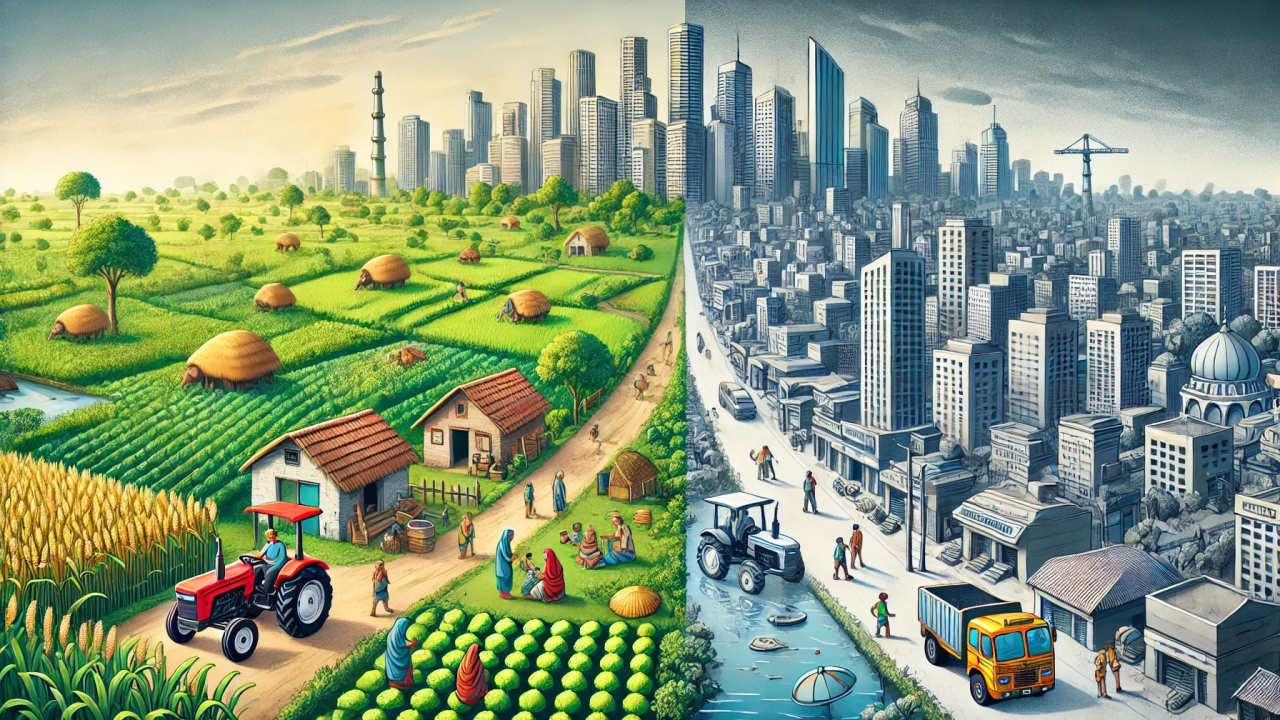
Rural expansion refers to the growth of agricultural land, villages, and infrastructure into previously natural or semi-natural ecosystems. This happens through:
-
Low-density, scattered growth
Unlike compact urban expansion, rural settlements spread outward in dispersed patterns.
-
Forms of expansion:
- Farmhouses and village housing.
- Second homes and tourism-linked construction (resorts, lodges).
- Infrastructure: Roads, utilities, irrigation systems, and small industries.
-
Driver
- Population growth in rural regions.
- Rising incomes and lifestyle-driven development.
- Agricultural intensification (cash crops, irrigation).
- Tourism and road connectivity in biodiversity-rich landscapes.
-
Scale
By 2020, rural settlements covered ~83 million hectares globally, compared to ~63 million hectares for urban areas.
-
Location
Rural expansion often overlaps with natural and semi-natural ecosystems, including forests, wetlands, and biodiversity hotspots.
How do they affect biodiversity?
- Direct Land Conversion: Rural expansion converted 2.3 times more natural land than urban growth (2000–2020). Encroachment into Key Biodiversity Areas (KBAs) was 3.7 times faster than urban expansion.
- Habitat Fragmentation: Dispersed settlements break up continuous habitats. Wildlife corridors (e.g., elephant and tiger movement routes in India) are disrupted.
- Indirect Impacts: Settlement-related disturbance spreads across landscapes:
-
-
- Noise and light pollution.
- Fuelwood collection and grazing pressure.
- Hunting and increased human access.
- Studies found disturbed areas were 30 times larger than the land directly built over.
-
- Agricultural Intensification: Shift to cash crops (cotton, sugarcane, soybean) increases water demand and pesticide/fertiliser use. Soil degradation and loss of microfauna reduce ecosystem resilience. Monocultures replace diverse rural landscapes, leading to “biological sterility.”
- Species Decline: Common countryside species (grey francolin, honey buzzard, drongos) have vanished from many areas. Invasive plants (Parthenium, Cassia tora) spread in disturbed landscapes, worsening biodiversity loss.
- Regional Hotspots: India and China together account for one-third of global settlement expansion. In India:
-
- Western Ghats: Village expansion along forest edges threatens endemic species.
- Central India: Settlements erode tiger reserve buffer zones.
- Himalayas: Road-linked rural construction disturbs fragile ecosystems.
Coasts: Villages encroach on mangroves and wetlands, reducing shoreline protection.
Subscribe to our Youtube Channel for more Valuable Content – TheStudyias
Download the App to Subscribe to our Courses – Thestudyias
The Source’s Authority and Ownership of the Article is Claimed By THE STUDY IAS BY MANIKANT SINGH