Font size:
Print
SHANTI Nuclear Bill
SHANTI Nuclear Bill
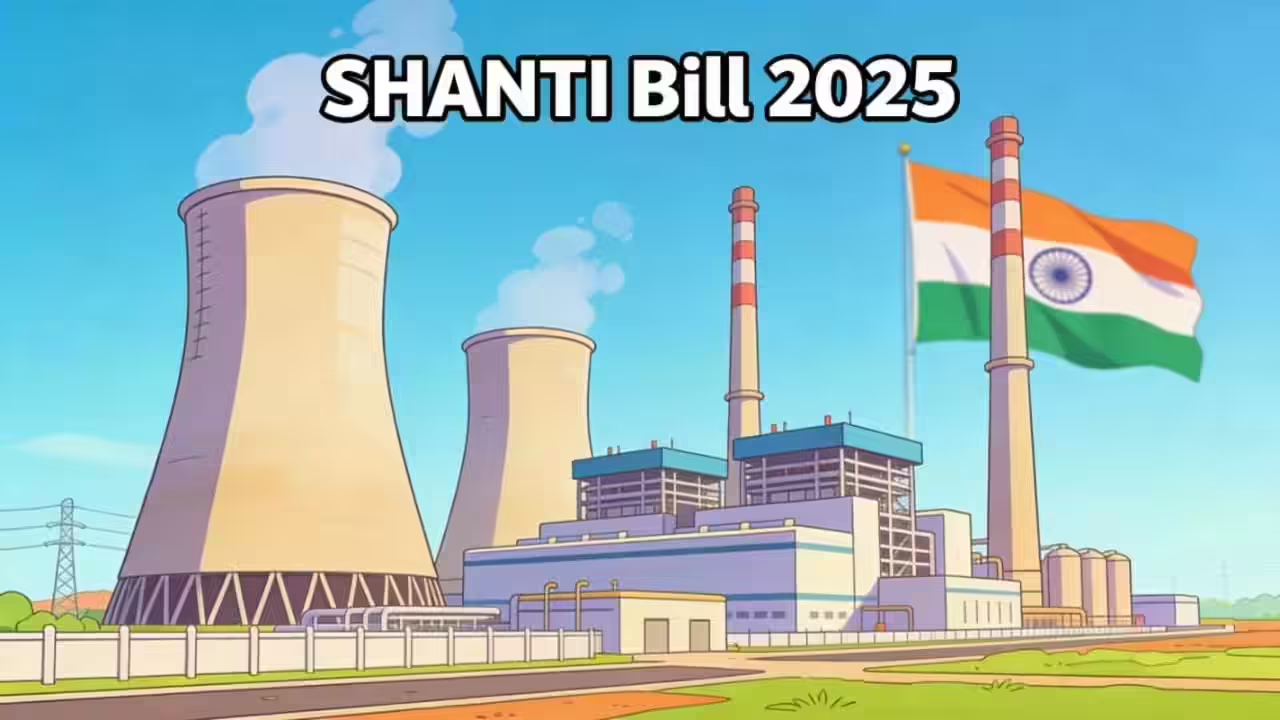
Context: The passage of the SHANTI Nuclear Bill, 2025 comes at a time when India is accelerating nuclear capacity to meet its net-zero commitments and rising base-load power demand.
What are the concerns associated with the SHANTI Bill, 2025?
-
Dilution of Sovereign Control over Nuclear Sector
-
-
- The SHANTI Bill amends the Atomic Energy Act, 1962 to allow private entities across the nuclear fuel cycle—from mining to reprocessing. Traditionally, India followed a state-monopoly model due to nuclear energy’s strategic, dual-use and security sensitivities.
- Concern: Fragmented private participation increases risks of regulatory lapses, diversion and profit-driven compromises. Countries like France and Russia continue strong state dominance, highlighting India’s departure from global best practices.
-
-
Weakening of Nuclear Liability Framework
-
-
- The Bill retains the 300 million SDR liability cap (~₹3,900 crore), unchanged since 2010, despite inflation and larger reactors. After this cap, liability shifts to the government.
- Concern: This creates public underwriting of private risk, violating the “polluter pays” principle. The Fukushima disaster (costs >$180 bn) shows the mismatch between real damages and capped liability. India’s CLNDA, framed post-Bhopal, originally ensured supplier accountability—now narrowed.
-
-
Erosion of Supplier Accountability
-
-
- The operator’s right of recourse against suppliers is largely confined to contracts or intentional acts.
- Concern: Design flaws or manufacturing defects may escape accountability, undermining deterrence. The Comptroller and Auditor General (CAG) has earlier flagged weak risk allocation in nuclear contracts.
-
-
Regulatory Independence and Executive Overreach
-
- The Atomic Energy Regulatory Board (AERB) remains under executive control, despite repeated calls—by the Standing Committee on Science & Technology—for an independent regulator.
- Concern: Conflict of interest arises as the same authority promotes, licenses and insures nuclear expansion.
Restricted Access to Justice and Transparency: Only government-authorised officials can initiate legal action; communities and states are excluded. Broad powers to exempt facilities and restrict information weaken precautionary and transparency principles, contrary to global nuclear governance norms.
Subscribe to our Youtube Channel for more Valuable Content – TheStudyias
Download the App to Subscribe to our Courses – Thestudyias
The Source’s Authority and Ownership of the Article is Claimed By THE STUDY IAS BY MANIKANT SINGH