Tackling Ocean Plastic Pollution
16 May 2026
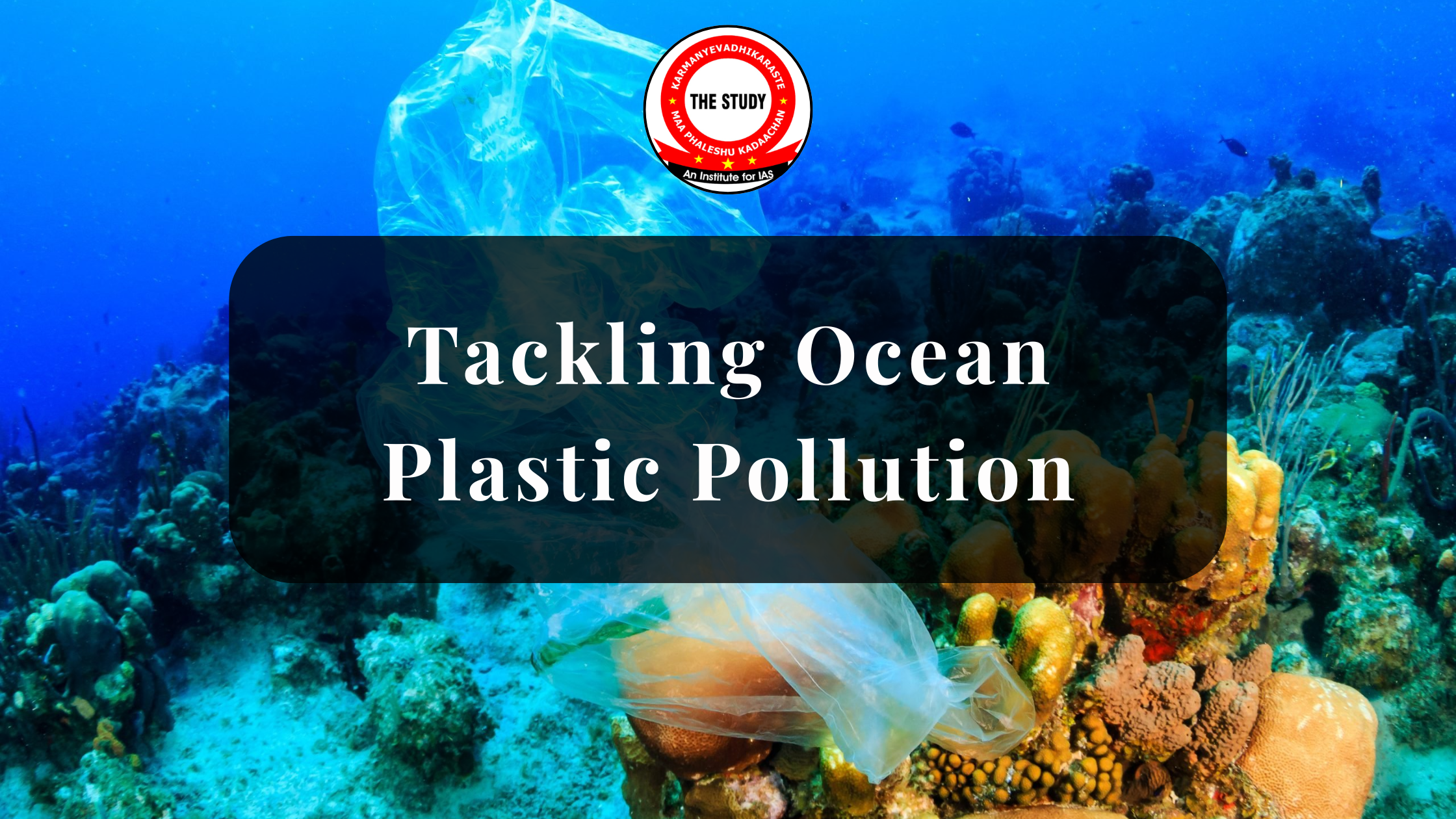
Tackling Ocean Plastic Pollution: A Global Environmental Challenge
Marine plastic pollution has emerged as one of the biggest environmental crises of the 21st century. Oceans, rivers, coastal ecosystems, and marine biodiversity are increasingly threatened by enormous volumes of plastic waste entering aquatic environments every year.
The challenge is not only environmental. Ocean plastic pollution also creates:
- Economic losses
- Public health concerns
- Livelihood insecurity
- Fisheries decline
- Tourism damage
- Ecosystem degradation
As governments and international institutions struggle to contain the crisis, marine biotechnology is emerging as an important scientific and policy tool for tackling marine plastic pollution through biodegradation, recycling, sustainable biomaterials, and circular economy solutions.
What is Marine Plastic Pollution?
Understanding Ocean Plastic Pollution
Marine plastic pollution refers to the accumulation of plastic waste in oceans, seas, rivers, estuaries, and coastal ecosystems.
Plastic enters marine environments through:
- Rivers and drainage systems
- Urban waste leakage
- Industrial discharge
- Fishing activities
- Shipping waste
- Tourism-related littering
Because plastics are highly durable, they remain in ecosystems for decades or even centuries.
Over time, larger plastic items break into:
- Microplastics (less than 5 mm)
- Nanoplastics (microscopic particles)
These particles are now found across nearly all marine ecosystems—from coastlines to deep oceans and even polar regions.
Major Causes of Marine Plastic Pollution
1. Rising Plastic Production and Low Recycling Rates
One of the biggest drivers of marine plastic pollution is the rapid increase in global plastic production.
Currently:
- Global plastic production exceeds 450 million tonnes annually
- Recycling rates remain below 10 percent globally
This creates massive waste streams that overwhelm waste management systems.
Most plastics are designed for durability but are used for short periods before disposal.
As production rises faster than recycling capacity, unmanaged plastic waste continues to accumulate.
2. Single-Use Plastics and Poor Waste Management
Single-Use Plastic Pollution
Single-use plastics such as:
- Plastic bags
- Bottles
- Food packaging
- Disposable cutlery
- Sachets
are major contributors to marine litter.
In many developing regions, weak waste collection systems lead to:
- Open dumping
- Informal disposal
- Riverine leakage
- Coastal waste accumulation
Mismanaged municipal waste eventually reaches oceans through waterways and stormwater systems.
Rapid urbanisation and inadequate infrastructure further worsen the problem.
3. Microplastics and Nanoplastics Pollution
Fragmentation of Plastic Waste
Unlike organic materials, plastics do not completely biodegrade naturally.
Instead, they fragment through:
- Sunlight exposure
- Wave action
- Chemical reactions
- Biological processes
This produces microplastics and nanoplastics, which are now found in:
- Marine food chains
- Fish and shellfish
- Deep-sea sediments
- Polar ice
- Drinking water
These particles can affect marine organisms and potentially human health through bioaccumulation.
4. Policy and Governance Gaps
Weak Plastic Governance Systems
Many countries still lack integrated plastic governance frameworks.
Major policy challenges include:
- Fragmented regulations
- Weak enforcement
- Limited producer accountability
- Poor upstream interventions
- Lack of international coordination
Most policies focus on waste disposal rather than reducing plastic production itself.
This creates gaps across the plastic lifecycle:
- Production
- Consumption
- Collection
- Recycling
- Disposal
Without coordinated governance, plastic leakage into oceans continues.
5. Socioeconomic Drivers of Ocean Plastic Pollution
Coastal Communities and Informal Sectors
Coastal populations, tourism industries, and informal waste sectors interact directly with marine ecosystems.
In many regions:
- Informal waste pickers lack institutional support
- Coastal infrastructure remains weak
- Fishing communities depend heavily on plastic products
- Tourism generates seasonal plastic surges
Often, local communities are excluded from environmental planning despite being directly affected.
This weakens long-term sustainability efforts.
How Marine Biotechnology Can Help Tackle Ocean Plastic Pollution
Marine Biotechnology Solutions
Marine biotechnology is emerging as an innovative scientific approach to tackling plastic pollution through:
- Biodegradation
- Enzymatic recycling
- Synthetic biology
- Bio-based materials
- Circular economy innovations
Rather than relying only on waste collection, marine biotechnology focuses on transforming how plastics are degraded, reused, and replaced.
Biodegradation and Enzymatic Recycling
Plastic-Degrading Microorganisms
Scientists have identified microorganisms and enzymes capable of breaking down certain plastics.
These microbes exist in:
- Marine ecosystems
- Soil environments
- Waste treatment systems
Specialized enzymes can degrade polymers into simpler molecular components.
This process is called enzymatic recycling.
Instead of burning or landfilling plastic waste, enzymatic recycling can:
- Recover reusable monomers
- Produce value-added chemicals
- Reduce environmental toxicity
- Support circular plastic economies
Research institutions and companies worldwide are rapidly developing scalable technologies in this area.
Engineering Microbial Consortia and Synthetic Biology
Synthetic Biology and Circular Bioeconomy
Advances in synthetic biology allow scientists to engineer microbial systems that can:
- Accelerate plastic degradation
- Convert waste into biofuels
- Produce industrial feedstocks
- Generate sustainable chemicals
Engineered microbial consortia may become critical tools in future waste management systems.
This supports the development of a circular bioeconomy, where waste materials are reused instead of discarded.
Bio-Based Alternatives to Conventional Plastics
Seaweed-Based and Marine Biomaterials
One of the most promising areas in marine biotechnology solutions is the development of bio-based alternatives to traditional plastics.
Marine biomaterials include:
- Seaweed-derived polymers
- Algal bioplastics
- Biodegradable marine composites
These materials can reduce dependence on fossil-fuel-based plastics while supporting coastal livelihoods and blue economy initiatives.
Countries investing in marine biomaterials may simultaneously promote:
- Sustainable fisheries
- Coastal employment
- Green industries
- Circular economy models
Importance of Policy Integration
Biotechnology Alone Cannot Solve Plastic Pollution
Experts emphasize that biotechnology must complement, not replace, strong policy frameworks.
Effective solutions require integration with:
- Environmental regulations
- Extended Producer Responsibility (EPR)
- Plastic reduction policies
- Waste segregation systems
- Digital traceability mechanisms
- Environmental risk assessments
Without governance reforms, technological solutions alone cannot address the scale of marine pollution.
Role of Communities and MSMEs
Community Participation in Ocean Plastic Management
Local communities are critical stakeholders in tackling marine plastic pollution.
Coastal communities and MSMEs can contribute through:
- Plastic collection systems
- Recycling initiatives
- Waste processing enterprises
- Marine bio-innovation projects
- Circular economy businesses
Community engagement ensures:
- Livelihood generation
- Better waste management compliance
- Cultural acceptance
- Sustainable implementation
Inclusive participation is therefore essential for long-term success.
Global Importance of Tackling Ocean Plastic Pollution
Why Marine Plastic Pollution Matters
Ocean plastic pollution affects:
- Marine biodiversity
- Fisheries productivity
- Human health
- Food security
- Climate resilience
- Tourism economies
Plastic pollution is increasingly recognized as a global environmental governance challenge similar to climate change.
International cooperation is therefore becoming essential.
Several countries are now negotiating global frameworks to reduce plastic pollution across the full lifecycle of plastics.
Key Takeaways
- Global plastic production exceeds 450 million tonnes annually while recycling remains below 10 percent.
- Single-use plastics and poor waste management are major causes of ocean plastic pollution.
- Plastics fragment into microplastics and nanoplastics that spread across marine ecosystems.
- Marine biotechnology offers solutions such as biodegradation, enzymatic recycling, and synthetic biology.
- Seaweed-based biomaterials provide sustainable alternatives to conventional plastics.
- Biotechnology must be integrated with regulations, EPR systems, and strong waste governance.
- Coastal communities and MSMEs are important partners in sustainable marine waste management.
Conclusion
Tackling ocean plastic pollution requires more than cleanup campaigns or recycling targets. The scale and complexity of the crisis demand a comprehensive transformation in how societies produce, use, manage, and dispose of plastics.
Marine biotechnology offers powerful new tools for:
- Plastic biodegradation
- Circular economy systems
- Sustainable biomaterials
- Green industrial innovation
However, scientific innovation alone cannot solve the crisis. Strong governance, international cooperation, community participation, and sustainable consumption patterns remain equally important.
The future of marine ecosystems—and ultimately human well-being, depends on how effectively the world integrates technology, policy, and societal action to address the growing plastic pollution crisis.
FAQs on Marine Plastic Pollution
What is marine plastic pollution?
Marine plastic pollution refers to the accumulation of plastic waste in oceans, seas, rivers, and coastal ecosystems.
What are microplastics?
Microplastics are plastic particles smaller than 5 mm formed through fragmentation of larger plastic materials.
Why is ocean plastic pollution dangerous?
It harms marine biodiversity, affects fisheries, contaminates food chains, damages tourism, and may impact human health.
What is marine biotechnology?
Marine biotechnology uses marine organisms and biological systems for environmental, industrial, and scientific applications.
How can marine biotechnology reduce plastic pollution?
It can support biodegradation, enzymatic recycling, synthetic biology solutions, and development of biodegradable alternatives.
What are seaweed-based bioplastics?
They are biodegradable materials derived from marine biomass such as seaweed and algae, used as sustainable alternatives to conventional plastics.
Related Posts :
- Crowded Indian Prisons
- Integrated Theatre Commands (ITCs)
- India–Vietnam Relations
- Sustainable Urbanisation
- Governor’s Role in Government Formation
- UPSC Prelims Exam Day Instructions 2026
- UPSC Prelims Admit Card 2026
- VB-GRAM G Act 2025
- China Decree 834
- Public Office Appointments
- NEET-UG Paper Leak
- Presidential Impeachment
- Majoritarianism vs Constitutionalism
Subscribe to our YouTube Channel for more Valuable Content – TheStudyias
Download the App to Subscribe to our Courses – Thestudyias
The Source’s Authority and Ownership of the Article is Claimed By THE STUDY IAS BY MANIKANT SINGH