Integrated Theatre Commands (ITCs)
9 May 2026
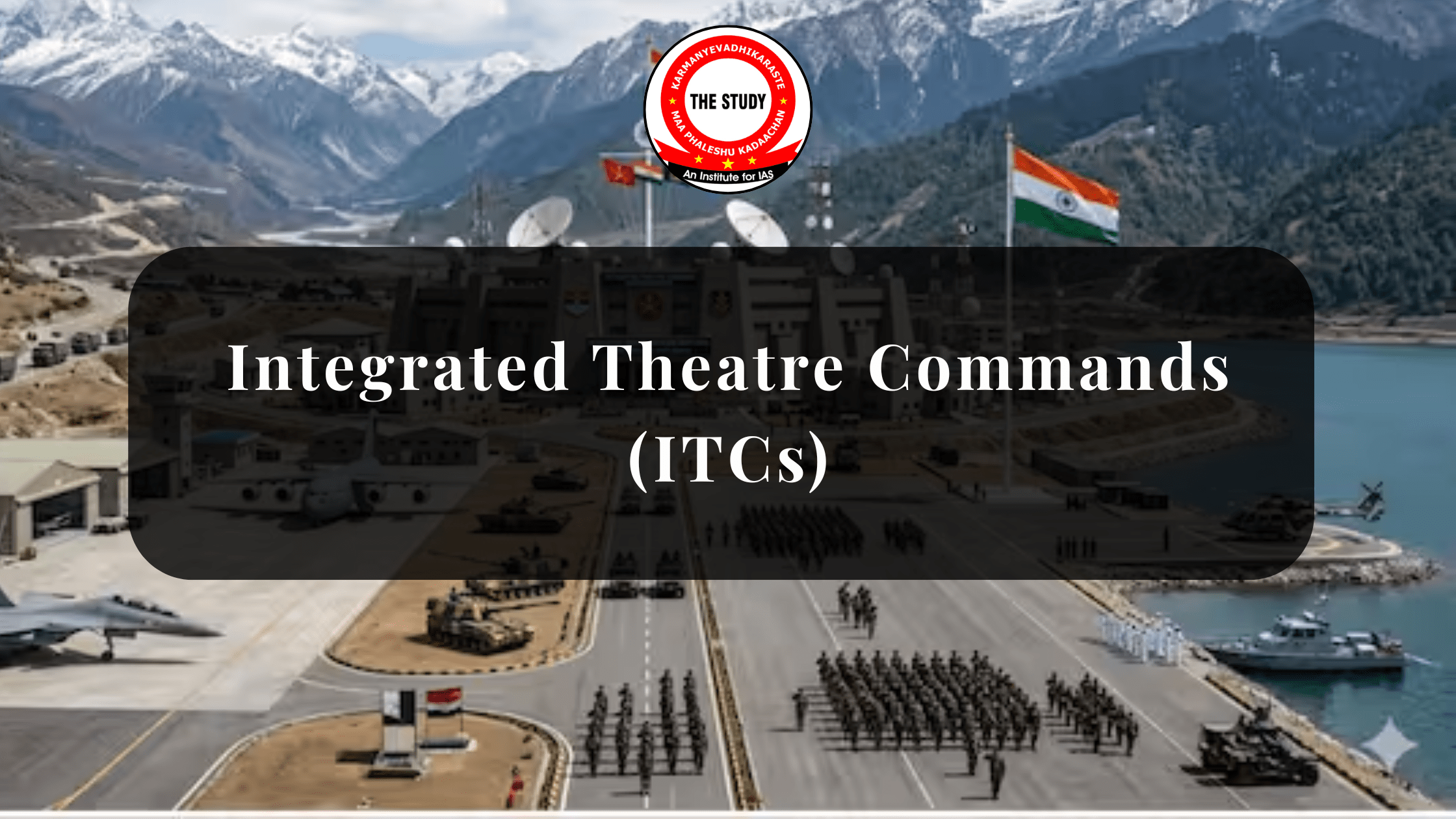
Integrated Theatre Commands (ITCs): Meaning, Structure, Importance, and Challenges in India
Context
One year after Operation Sindoor, India’s long-pending proposal for Integrated Theatre Commands (ITCs) has gained renewed momentum as the country pushes for greater military integration and faster operational response.
What is an Integrated Theatre Command (ITC)?
An Integrated Theatre Command (ITC) is a unified military structure in which the Army, Navy, and Air Force assets within a specific geographical theatre are placed under a single operational commander.
The objective is to create a joint fighting force capable of conducting coordinated military operations without delays caused by inter-service fragmentation.
Why Does India Need Integrated Theatre Commands?
India currently follows a fragmented command structure:
- Army Commands: 7
- Air Force Commands: 7
- Naval Commands: 3
These commands function independently, often requiring multiple layers of coordination during conflicts or emergencies.
Problems in the Existing System
- Delayed decision-making
- Duplication of resources
- Lack of unified operational planning
- Coordination gaps between services
- Slower military response during crises
Integrated Theatre Commands aim to solve these structural inefficiencies.
Key Features of Integrated Theatre Commands
1. Single Point of Command
A single theatre commander controls:
- Army assets
- Air Force assets
- Naval assets
- Cyber capabilities
- Space and surveillance systems
This ensures unified command and faster operational execution.
2. Joint Planning and Execution
Military operations are planned and executed collectively rather than separately by each service.
Benefits
- Faster coordination
- Better intelligence sharing
- Improved battlefield efficiency
- Seamless multi-domain warfare capability
3. Integrated Warfare Capability
Modern warfare increasingly combines:
- Land warfare
- Air warfare
- Naval operations
- Cyber warfare
- Space-based surveillance
ITCs are designed to support this integrated military strategy.
Existing Tri-Service Commands in India
India already has two tri-service military structures:
Andaman and Nicobar Command (ANC)
- India’s only geographical tri-service command
- Focuses on the Indian Ocean region
- Integrates Army, Navy, and Air Force assets
Strategic Forces Command (SFC)
- Handles India’s nuclear assets
- Responsible for strategic deterrence
However, both commands are limited in scale compared to the proposed theatre command model.
Proposed Integrated Theatre Commands in India
According to the plan supported by Chief of Defence Staff (CDS) General Anil Chauhan, India may adopt a three-theatre structure.
1. Northern Theatre Command
Focus Area
- China border
- Northern frontiers
Key Responsibility
- Managing threats along the Line of Actual Control (LAC)
2. Western Theatre Command
Focus Area
- Pakistan border
- Western military front
Key Responsibility
- Coordinating military operations against western threats
3. Maritime Theatre Command
Focus Area
- Indian Ocean Region (IOR)
Key Responsibility
- Naval security
- Sea lanes protection
- Maritime dominance
Advantages of Integrated Theatre Commands
Faster Decision-Making
A unified command reduces delays during military operations.
Better Resource Utilisation
Sharing assets avoids duplication and improves efficiency.
Enhanced Jointness
Promotes coordination among:
- Army
- Navy
- Air Force
Improved Combat Capability
Integrated planning strengthens India’s response capability in multi-front conflicts.
Modernisation of Indian Defence System
ITCs align India with advanced military powers like:
- United States
- China
Challenges in Implementing ITCs
Inter-Service Differences
Different operational doctrines and priorities may create resistance.
Air Force Concerns
The Indian Air Force has raised concerns regarding:
- Division of air assets
- Flexibility of air power deployment
Structural Reorganisation
Implementation requires:
- Major command restructuring
- Policy changes
- New communication systems
Financial and Administrative Costs
The transition process will require:
- Infrastructure upgrades
- Technology integration
- Training reforms
Importance of ITCs for India
Integrated Theatre Commands are critical for:
- National security
- Border preparedness
- Maritime security
- Rapid military mobilisation
- Future warfare readiness
The system is particularly important as India faces simultaneous security challenges from:
- China
- Pakistan
- Expanding cyber and maritime threats
Key Takeaways
- Integrated Theatre Commands unify Army, Navy, and Air Force assets under one commander.
- India currently operates 17 separate military commands.
- Proposed structure includes Northern, Western, and Maritime Theatre Commands.
- ITCs aim to improve coordination, speed, and combat efficiency.
- The reform is central to India’s military modernisation strategy.
Conclusion
Integrated Theatre Commands represent one of the most significant military reforms in independent India. As warfare becomes increasingly technology-driven and multi-domain in nature, India requires a faster, more integrated defence structure capable of responding to complex threats.
If implemented effectively, ITCs can transform India’s war-fighting capability, strengthen joint military operations, and improve strategic preparedness against future challenges.
FAQs on Integrated Theatre Commands (ITCs)
Q1. What is an Integrated Theatre Command (ITC)?
An Integrated Theatre Command is a unified military structure where Army, Navy, and Air Force assets in a geographical region operate under a single commander.
Q2. Why does India need Integrated Theatre Commands?
India needs ITCs to improve coordination among the three armed forces, reduce operational delays, and strengthen military preparedness against modern security threats.
Q3. How many military commands does India currently have?
India currently has 17 separate commands:
- 7 Army Commands
- 7 Air Force Commands
- 3 Naval Commands
Q4. What are the proposed Integrated Theatre Commands in India?
The proposed structure includes:
- Northern Theatre Command
- Western Theatre Command
- Maritime Theatre Command
Q5. Who is leading the Integrated Theatre Command reform process in India?
The reform process is being guided by the Chief of Defence Staff (CDS), General Anil Chauhan.
Q6. What is the role of the Northern Theatre Command?
The Northern Theatre Command will primarily focus on security challenges along the China border and the Line of Actual Control (LAC).
Q7. What is the Maritime Theatre Command?
The Maritime Theatre Command will focus on naval operations, maritime security, and protection of India’s interests in the Indian Ocean Region.
Q8. What are the benefits of Integrated Theatre Commands?
Major benefits include:
- Faster military response
- Better resource utilisation
- Improved joint operations
- Stronger combat capability
- Enhanced national security
Q9. Which countries already use Theatre Commands?
Countries like the United States and China already operate integrated theatre command systems.
Q10. What challenges does India face in implementing ITCs?
Challenges include:
- Inter-service differences
- Structural reorganisation
- Air Force concerns over asset division
- Administrative and financial costs
Related Topics :
• Index of Service Production (ISP)
• CDSCO: Role, Challenges, and Digital Drugs Regulatory System (DDRS)
• Rights of Persons with Disabilities (RPwD) Act, 2016
• Supreme Court Judge’s Strength
• Chief Minister Resignation Rules Under the Indian Constitution
• Indian Navy Maritime Security Strategy 2026 Explained
Subscribe to our YouTube Channel for more Valuable Content – TheStudyias
Download the App to Subscribe to our Courses – Thestudyias
The Source’s Authority and Ownership of the Article is Claimed By THE STUDY IAS BY MANIKANT SINGH
Comments (0)
Leave a Comment