Modern History Strategy for UPSC Optional (Paper 2)
11 Jun 2026
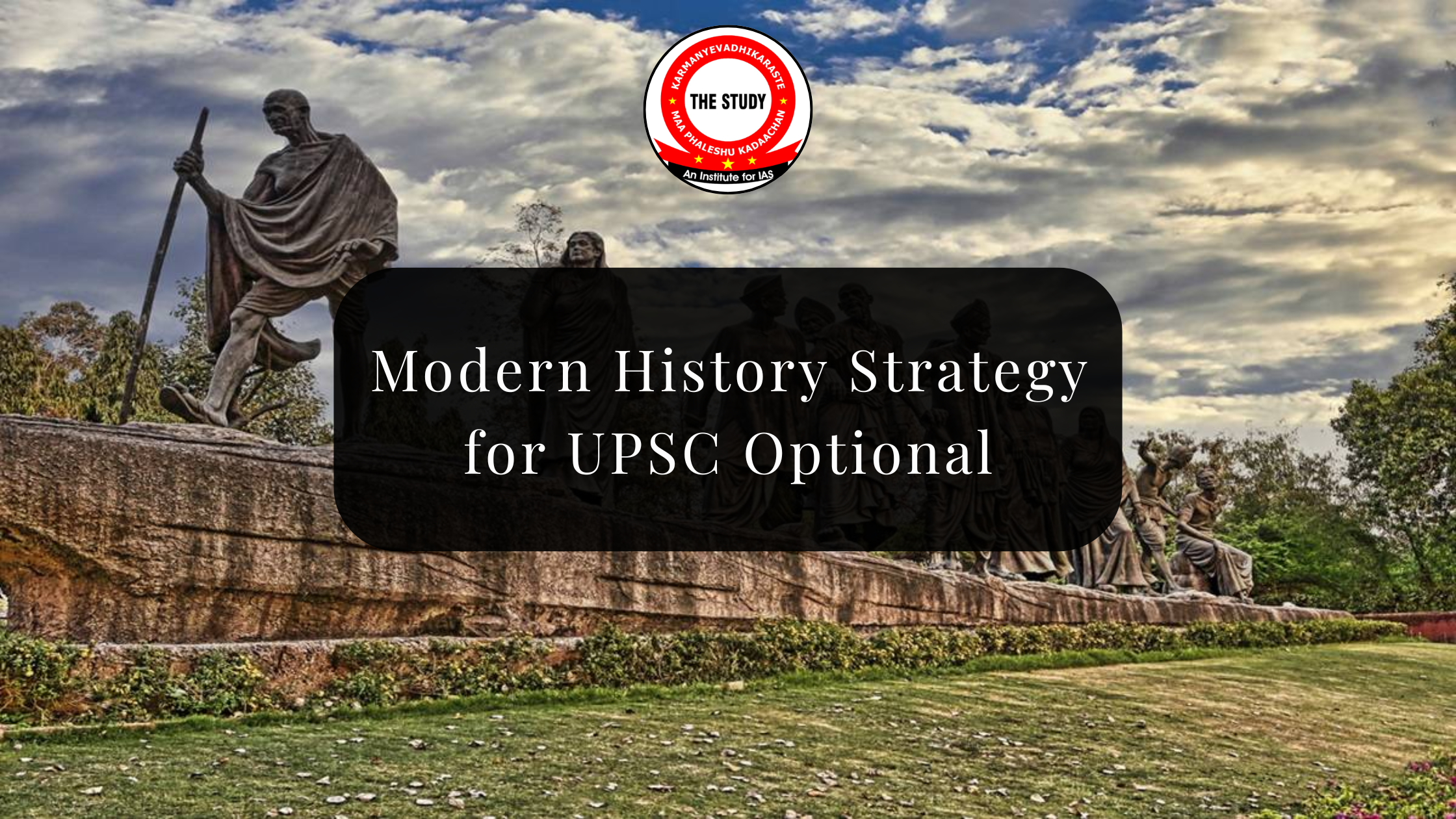
Modern History Strategy for UPSC Optional (Paper 2)
The Most Practical Roadmap for 2026 Aspirants
- UPSC History Optional Paper 2 (Modern India) is often considered the “rank deciding” section of the optional because it overlaps heavily with General Studies, Essay, Ethics, and even Interview preparation. Yet many aspirants underperform in this paper despite reading standard books multiple times. The reason is simple — they prepare Modern History like GS instead of Optional.
- A serious aspirant must understand one reality: UPSC History Optional Paper 2 is not about memorising events from 1857 to 1947. It is about interpretation, historiography, linkage-building, and analytical answer writing.
- According to trends observed from topper copies, coaching institute analyses, and PYQ patterns from the last 10 years, nearly 55–65% questions in Paper 2 are analytical rather than factual. Questions increasingly focus on themes like nationalism, peasant movements, colonial economy, ideology of leaders, historiography, and socio-religious reforms rather than simple chronology.
- Many aspirants spend 70% of their time reading and only 30% practicing answers. Successful candidates usually reverse this ratio after syllabus completion.
- This blog provides a realistic strategy — not motivational theory — for mastering Modern History Optional with limited sources, structured revision, and data-backed preparation.
How Should You Prepare Modern History Optional Paper 2 Strategically?
What Makes Modern History Optional Different from GS History?
This is the first mistake beginners make.
In GS, you can survive with broad understanding. In Optional, UPSC expects depth, interpretation, and historian-based analysis. For example: A GS question may ask: “Discuss the causes of the Revolt of 1857.”
But Optional asks: “Was the Revolt of 1857 merely a military mutiny? Critically examine.”
This changes everything.
You must:
- Quote historians
- Compare viewpoints
- Evaluate causes and consequences
- Write multidimensional answers
Optional preparation therefore requires:
- Historiography
- Thematic understanding
- Interlinking events
- Scholarly interpretation
This is why many toppers rely heavily on historian notes and PYQ mapping rather than only NCERTs.
Which Sources Are Actually Enough for High Marks?
One major problem among aspirants is source overload.
Most rankers repeatedly say that 80% marks come from 20% sources revised multiple times.
A practical source list is:
Core Books
- Bipan Chandra — India’s Struggle for Independence
- Bipan Chandra — India Since Independence
- Sekhar Bandyopadhyay — From Plassey to Partition
- Sumit Sarkar — Modern India
- Spectrum — for quick revision only
Important Additions
- IGNOU BA/MA notes for historiography
- Coaching compilations for historian quotes
- PYQ book (mandatory)
What Toppers Usually Do
Most successful aspirants:
- Read one standard source deeply
- Make micro notes
- Add historian viewpoints separately
- Revise PYQ themes repeatedly
Aspirants who keep changing material usually struggle with revision.
How Important Are Historians and Historiography?
Extremely important.
Modern History Optional without historiography is incomplete.
UPSC increasingly asks interpretation-based questions such as:
- Was nationalism an elite movement?
- Did socio-religious reforms strengthen colonialism?
- Was Gandhi a strategist or moralist?
- Did British rule modernise India accidentally?
To answer such questions, you need historian perspectives.
Examples:
- Bipan Chandra → Nationalist interpretation
- Sumit Sarkar → Marxist orientation
- R.C. Majumdar → Critical view of Congress
- Judith Brown → Gandhi-focused interpretation
- Anil Seal → Cambridge School
Adding even 2–3 historian references can dramatically improve answer quality.
Data from topper copies shows high-scoring answers usually contain:
- Historians
- Committees/reports
- Precise facts
- Balanced conclusions

What Is the Best Answer Writing Strategy?
This is where marks are actually made.
Many aspirants know content but cannot convert it into marks.
A strong Modern History answer should contain:
Introduction
- Define theme
- Mention context
- Add historian quote if relevant
Body
Use subheadings such as:
- Political dimension
- Economic dimension
- Ideological dimension
- Social impact
- Criticism
Add Value Elements
- Historian viewpoints
- Government reports
- Congress sessions
- Committees/Acts
- Timeline references
Conclusion
Avoid generic conclusions.
Instead:
- Give balanced judgement
- Mention long-term significance
- Link to nationalism/state formation/democracy
Important Data
Analysis of topper copies and coaching evaluations shows:
- Average topper answer length: 3–4 pages
- Diagram/flowchart usage: moderate
- Historian references per answer: 2–4
- Time spent per question: 7–11 minutes
The biggest differentiator is not handwriting — it is structure and interpretation.
How Much Time Does Modern History Optional Actually Need?
A beginner usually requires:
- 4–5 months for first completion
- 2 months for consolidation
- 3–4 revisions before Mains
Working professionals may need longer.
A realistic daily plan:
- 3 hours reading
- 2 hours notes/PYQ analysis
- 1 hour answer writing
Weekly targets matter more than daily motivation.
A practical mistake to avoid:
Do not spend six months making decorative notes.
Most toppers now prefer:
- Digital short notes
- PYQ tagging
- Theme-wise revision sheets
What Are the Biggest Mistakes Aspirants Make?
- Mistake 1: Treating Optional Like GS: This leads to superficial preparation.
- Mistake 2: Ignoring PYQs: UPSC repeats themes, not exact questions.
- Mistake 3: No Historiography: This limits answers to average range.
- Mistake 4: Excessive Sources: Too many books reduce revision quality.
- Mistake 5: Delaying Answer Writing: Optional cannot improve through passive reading.
- Mistake 6: Ignoring Post-Independence: This section is often underprepared despite scoring potential.
Final Verdict: Is Modern History Optional Still Worth It in 2026?
Yes — but only for aspirants who genuinely enjoy analytical reading and writing.
Modern History remains one of the most rewarding parts of History Optional because:
- Sources are limited
- GS overlap is significant
- Questions are predictable thematically
- Content helps Essay and Interview
- Good writing can fetch very high marks
However, success depends less on intelligence and more on:
- Revision discipline
- Historian integration
- PYQ mastery
- Consistent answer writing
Aspirants who complete 15–20 years PYQs thoroughly usually gain a major advantage over those endlessly collecting material.
The smartest strategy in 2026 is not reading more books.
It is revising fewer sources better than everyone else.
FAQ
Is Spectrum enough for Modern History Optional?:
- No. Spectrum is useful only for revision. Optional requires analytical depth and historiography.
Which is the best book for Modern India Optional?:
- Sekhar Bandyopadhyay and Bipan Chandra together cover most dimensions effectively.
How many answers should I practice weekly?:
- At least 10–15 quality answers after syllabus completion.
Is coaching necessary for Modern History Optional?:
- Not compulsory. Many toppers clear with self-study plus PYQ analysis and test series.
Which section carries maximum weightage?:
- The National Movement and Gandhian era dominate Paper 2 consistently.
How important is Post-Independence India?:
- Very important and often ignored by competitors.
Can beginners score 300+ in History Optional?:
- Yes, but only with structured revision, historian-based answers, and regular writing practice.
Related posts
- History vs PSIR Optional - UPSC Comparison (Data + Topper Analysis)
- History vs Anthropology Optional - Complete Analysis for UPSC
- History vs Geography Optional - Which is Better for UPSC?
- History vs Sociology Optional - Scoring, Syllabus & Success Rate Compared
- Best Optional Subject for UPSC 2026 - Complete Guide
- Which Optional Has the Highest Success Rate in UPSC?
- Easiest Optional Subject for UPSC - Reality Check with Data
- Best Optional Subject for Hindi Medium UPSC Aspirants
- Is History Optional Good for UPSC 2026? (Updated Analysis)
- Answer Writing Strategy for History Optional (Score 300+)
- How to Complete History Optional Syllabus in 6 Months (you have generic, not optional-specific)
You can also read :
Can You Change Optional After Prelims? Full Strategy Guide
History Optional Booklist 2026
How to Revise History Optional 3 Times Before Mains
Optional Subject + Prelims Preparation Parallel Strategy
Optional Subject Selection Mistakes That Cost Rank
Subscribe to our YouTube Channel for more Valuable Content – TheStudyias
Download the App to Subscribe to our Courses – Thestudyias
The Source’s Authority and Ownership of the Article is Claimed By THE STUDY IAS BY MANIKANT SINGH
Comments (0)
Leave a Comment