BHAVYA Scheme
13 Jun 2026
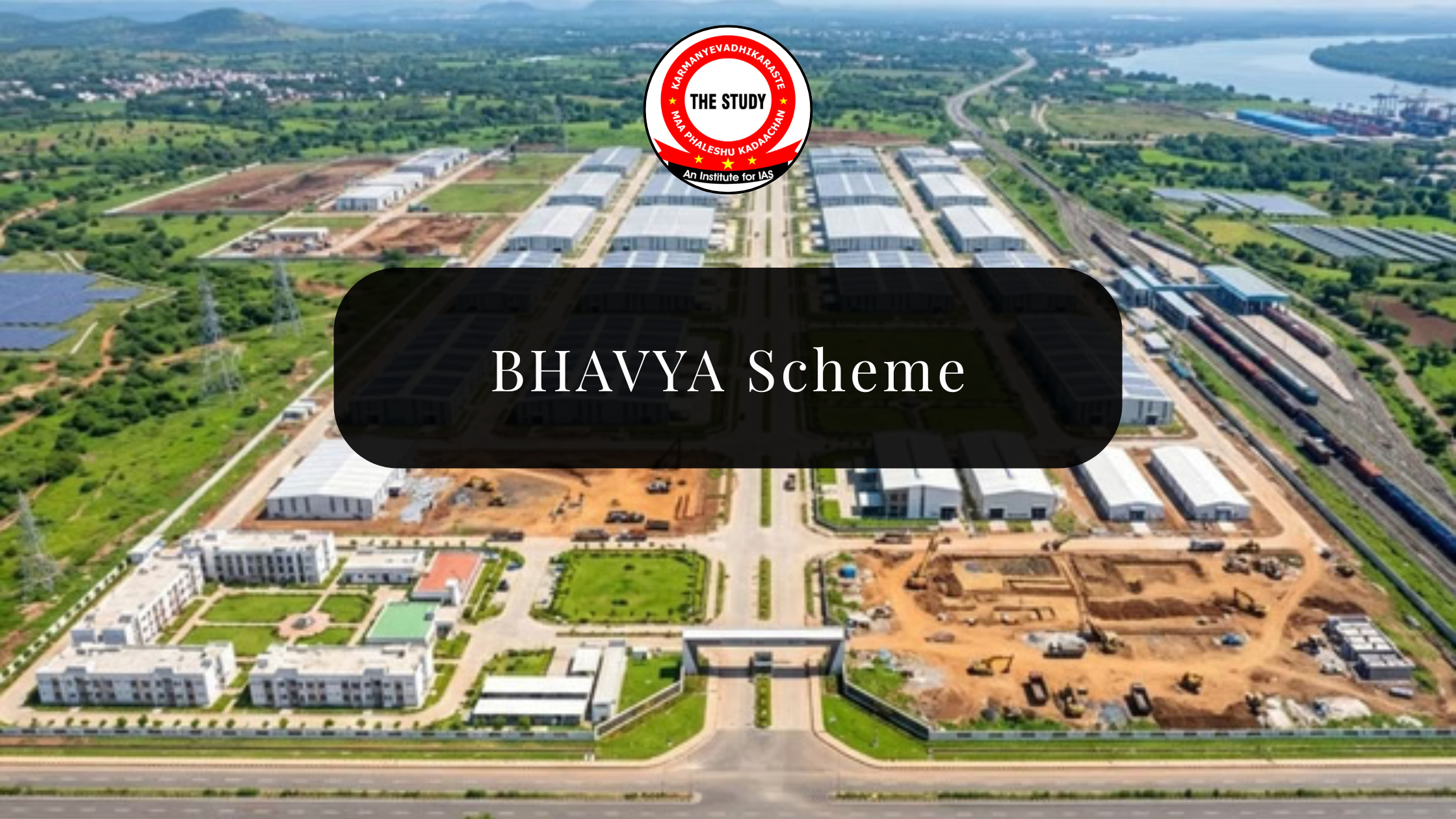
BHAVYA Scheme: Bharat Audyogik Vikas Yojna for 100 Plug-and-Play Industrial Parks in India
BHAVYA Scheme Context
The BHAVYA Scheme recently came into focus after the Union Commerce and Industry Minister launched the BHAVYA Portal to support the development of 100 investment-ready industrial parks across India. BHAVYA stands for Bharat Audyogik Vikas Yojna. It is a major Central government initiative aimed at creating modern plug-and-play industrial parks with ready land, infrastructure, utilities, connectivity, and investor support.
The BHAVYA Scheme is important because India wants to strengthen manufacturing, attract domestic and global investment, generate employment, and improve ease of doing business. Instead of forcing industries to deal with delays in land acquisition, approvals, roads, power, water, and logistics, the scheme aims to offer ready industrial ecosystems.
BHAVYA Scheme Meaning and Objective
The BHAVYA Scheme means Bharat Audyogik Vikas Yojna. Its main objective is to develop 100 world-class industrial parks across the country over six years. These parks will be designed as investment-ready zones where industries can begin operations faster.
The scheme focuses on plug-and-play infrastructure. This means industries will get access to pre-planned land, internal roads, power, water, drainage, utilities, testing facilities, digital systems, and social infrastructure. The larger goal of the BHAVYA Scheme is to make India a more competitive manufacturing destination.
BHAVYA Scheme Key Features
BHAVYA Scheme Financial Outlay
The BHAVYA Scheme has a total financial outlay of ₹33,660 crore. This funding will support the development of 100 industrial parks across India. The financial support will help create core infrastructure, value-added infrastructure, social infrastructure, and external connectivity. This makes the scheme a major industrial infrastructure push for manufacturing-led growth.
BHAVYA Scheme Timeline
The 100 plug-and-play industrial parks under the BHAVYA Scheme are planned for development over six years, from 2026-27 to 2031-32. This long-term timeline gives states and implementing agencies enough space to plan, submit proposals, develop land, build infrastructure, and attract investors. The scheme is expected to create a strong industrial base for India’s future growth.
BHAVYA Scheme Implementing Agency
The National Industrial Corridor Development Corporation, or NICDC, has been designated as the project management agency for the BHAVYA Scheme. NICDC will support implementation, monitoring, and coordination through the BHAVYA Portal. This digital platform will help in proposal submission, project appraisal, evaluation, and real-time monitoring.
BHAVYA Scheme Selection Process
The BHAVYA Scheme will follow a challenge-mode selection process. This means states and implementing agencies will compete by submitting strong project proposals based on land availability, industrial potential, connectivity, investor interest, and project readiness. In the first phase, up to 50 industrial parks will be selected, while the remaining 50 will be taken up later.
BHAVYA Scheme Park Size and State Role
Under the BHAVYA Scheme, industrial parks can range from 100 acres to 1000 acres. For hilly states, North Eastern states, Union Territories, and smaller states, parks may be approved on smaller land parcels starting from 25 acres. This flexible design allows the scheme to support both large industrial regions and smaller strategic locations.
State governments will play a major role in the BHAVYA Scheme. They are expected to provide land and submit detailed project proposals. The Centre will support infrastructure development and project implementation. This Centre-State partnership is important for creating industrial parks that match regional strengths and local economic potential.
BHAVYA Scheme Plug-and-Play Industrial Park Model
The core idea of the BHAVYA Scheme is plug-and-play industrial development. In this model, industries do not have to start from zero. They get access to ready infrastructure, pre-approved land, internal connectivity, utilities, and basic services.
This helps reduce delays and improves ease of doing business. For investors, it means faster project setup. For states, it means better industrial development. For workers and local communities, it means more employment, better infrastructure, and new economic opportunities.
BHAVYA Scheme Significance for India
BHAVYA Scheme Reduces Entry Barriers for Investors
The BHAVYA Scheme reduces major entry barriers for investors by providing ready industrial infrastructure. Industries often face delays due to land acquisition, approvals, basic infrastructure, and utility connections. With plug-and-play industrial parks, businesses can begin operations faster and with greater certainty. This improves investor confidence and makes India more attractive for manufacturing.
BHAVYA Scheme Boosts Manufacturing Growth
The BHAVYA Scheme supports India’s manufacturing growth by creating industrial ecosystems across states. These parks can host manufacturing units, MSMEs, startups, logistics providers, data centres, chemical industries, and other sector-specific businesses. By offering common infrastructure and better connectivity, the scheme can help industries become more productive and globally competitive.
BHAVYA Scheme Creates Jobs and Regional Growth
One of the biggest benefits of the BHAVYA Scheme is employment generation. Industrial parks can create direct jobs in factories and indirect jobs in logistics, services, housing, maintenance, transport, and local supply chains. The scheme can also promote regional industrialisation by taking manufacturing opportunities beyond traditional industrial hubs.
BHAVYA Scheme Supports MSMEs and Startups
The BHAVYA Scheme is not only for large industries. It can also support MSMEs, startups, deep-tech enterprises, and innovation-led businesses. Ready-built factory sheds, testing labs, warehousing, digital systems, and common services can reduce operational pressure on smaller businesses. This can help MSMEs scale faster and connect with larger supply chains.
BHAVYA Scheme Infrastructure Support
The BHAVYA Scheme provides support for different types of infrastructure. Core infrastructure may include internal roads, drainage, underground utilities, water supply, power, treatment facilities, ICT systems, and administrative systems. Value-added infrastructure may include factory sheds, built-to-suit units, testing labs, and warehousing.
The scheme also focuses on social infrastructure such as worker housing and support amenities. External infrastructure support can improve road, rail, port, airport, and logistics connectivity. This integrated approach makes the BHAVYA Scheme more than just a land development project; it creates complete industrial ecosystems.
BHAVYA Scheme and Ease of Doing Business
The BHAVYA Scheme directly supports ease of doing business in India. By offering ready industrial parks with single-window clearances, digital systems, connectivity, and planned infrastructure, the scheme reduces the time and uncertainty involved in setting up industrial units.
For investors, the biggest advantage is speed. Instead of spending months or years on land, approvals, and infrastructure development, industries can focus on production, hiring, exports, and business expansion. This makes the BHAVYA Scheme important for India’s investment climate.
BHAVYA Scheme and National Industrial Policy
The BHAVYA Scheme is aligned with India’s larger national industrial policy goals. It supports Make in India, Atmanirbhar Bharat, Viksit Bharat 2047, manufacturing-led growth, supply chain resilience, and export competitiveness. It also promotes cluster-based development, where industries, suppliers, logistics providers, and service units operate in a connected ecosystem.
This cluster-based model can deepen domestic supply chains and reduce industrial fragmentation. By developing industrial parks across states, the BHAVYA Scheme can also reduce regional imbalance and create new centres of manufacturing growth.
BHAVYA Scheme Key Takeaways
- BHAVYA Scheme stands for Bharat Audyogik Vikas Yojna.
- The scheme aims to develop 100 plug-and-play industrial parks across India.
- The total financial outlay is ₹33,660 crore.
- The timeline is six years, from 2026-27 to 2031-32.
- NICDC is the project management agency for implementation and monitoring.
- The scheme follows challenge-mode selection for high-quality proposals.
- States will provide land and submit strong project proposals.
- The scheme supports manufacturing, MSMEs, startups, jobs, logistics, and regional industrialisation.
BHAVYA Scheme Conclusion
The BHAVYA Scheme is a major step towards creating investment-ready industrial infrastructure in India. By developing 100 plug-and-play industrial parks, the scheme aims to reduce entry barriers for investors, accelerate manufacturing, generate employment, and strengthen regional industrial growth.
Its success will depend on strong state participation, timely land availability, transparent selection, quality infrastructure, and effective monitoring through the BHAVYA Portal. If implemented properly, the BHAVYA Scheme can become an important pillar of India’s manufacturing-led growth strategy and support the vision of Viksit Bharat 2047.
BHAVYA Scheme FAQs
What is the BHAVYA Scheme?
The BHAVYA Scheme, or Bharat Audyogik Vikas Yojna, is a Central government initiative to develop 100 plug-and-play industrial parks across India. It aims to boost investment, manufacturing, employment, and regional industrialisation.
What is the full form of BHAVYA Scheme?
The full form of BHAVYA Scheme is Bharat Audyogik Vikas Yojna.
What is the financial outlay of the BHAVYA Scheme?
The BHAVYA Scheme has a total financial outlay of ₹33,660 crore for developing 100 investment-ready industrial parks.
Who will implement the BHAVYA Scheme?
The National Industrial Corridor Development Corporation, or NICDC, has been designated as the project management agency for the BHAVYA Scheme.
How many industrial parks will be developed under the BHAVYA Scheme?
Under the BHAVYA Scheme, 100 plug-and-play industrial parks will be developed across India.
Why is the BHAVYA Scheme important?
The BHAVYA Scheme is important because it provides ready industrial infrastructure, reduces delays for investors, promotes manufacturing, creates jobs, supports MSMEs, and strengthens India’s industrial competitiveness.
How is the BHAVYA Scheme relevant for UPSC?
The BHAVYA Scheme is relevant for UPSC topics such as industrial policy, infrastructure development, manufacturing, employment, ease of doing business, regional growth, MSMEs, and public policy.
Related posts :
- Majoritarianism vs Constitutionalism
- India-Bangladesh Ties
- Nordic Countries and India
- Tackling Ocean Plastic Pollution
- India-Bhutan Ties
- India-UAE Ties
- India-Netherlands Ties
- Captagon: The “Jihadi Drug”
- Bioenergy Systems
- Transforming the Brahmaputra
- India–Africa Forum Summit
- India–US Defence Ties
Subscribe to our YouTube Channel for more Valuable Content – TheStudyias
Download the App to Subscribe to our Courses –Thestudyias
The Source’s Authority and Ownership of the Article is Claimed By THE STUDY IAS BY MANIKANT SINGH
Comments (0)
Leave a Comment