Bioenergy Systems
20 May 2026
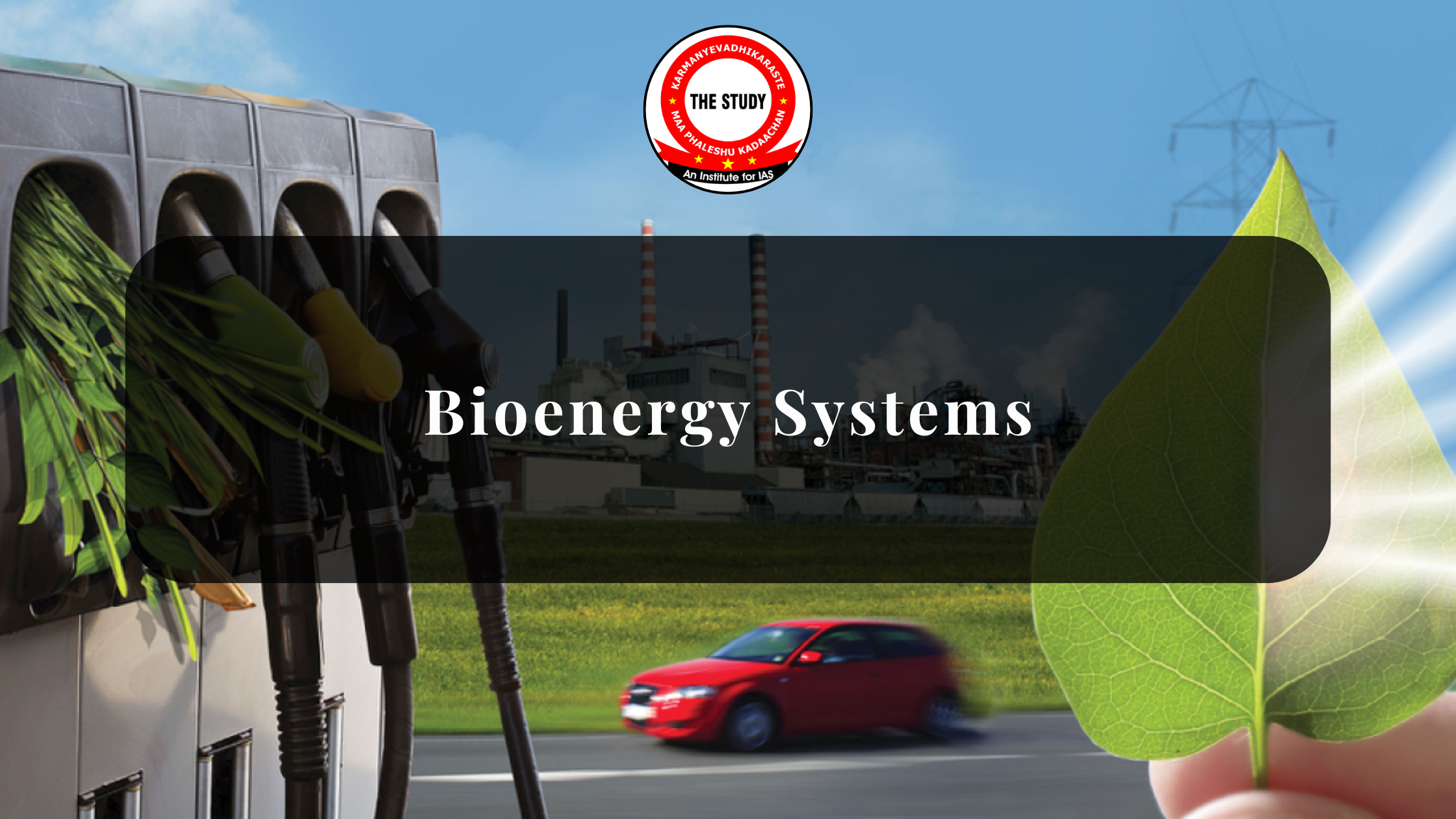
Bioenergy Systems
Context
Global energy supply chains continue to face uncertainty due to geopolitical tensions, fluctuating crude oil prices, and disruptions in fossil fuel trade routes. For countries like India, which depend heavily on imported energy resources, strengthening domestic energy security has become increasingly important.
In this context, bioenergy systems are emerging as a critical component of sustainable and resilient energy infrastructure.
What are Bioenergy Systems?
Bioenergy systems are systems that generate useful energy from biomass. Biomass refers to organic materials derived from plants, animals, and biodegradable waste.
These systems convert organic matter into:
- Heat
- Electricity
- Liquid biofuels
- Gaseous fuels
Bioenergy systems utilise:
- Crop residues
- Wood and forestry waste
- Animal manure
- Municipal organic waste
- Agricultural by-products
- Industrial organic residues
- Dedicated energy crops
Thus, bioenergy systems transform waste and organic residues into storable and dispatchable forms of renewable energy.
Sources of Biomass in Bioenergy Systems
Agricultural Biomass
- Rice husk
- Sugarcane bagasse
- Wheat straw
- Cotton stalk
- Crop residues
Forest Biomass
- Wood chips
- Sawdust
- Forestry residues
Animal Waste
- Cow dung
- Poultry litter
- Animal manure
Municipal Organic Waste
- Food waste
- Sewage sludge
- Biodegradable urban waste
Industrial Organic Waste
- Distillery waste
- Paper mill residues
- Food processing waste
Major Bioenergy Conversion Technologies
1. Combustion
Combustion is the direct burning of biomass to produce heat and electricity.
Applications
- Biomass power plants
- Cooking fuel
- Industrial heating
Advantages
- Simple technology
- Large-scale electricity generation
2. Gasification
Gasification converts biomass into producer gas or syngas through partial combustion at high temperatures.
Products
- Carbon monoxide
- Hydrogen
- Methane
Uses
- Electricity generation
- Industrial fuel
- Synthetic fuel production
3. Anaerobic Digestion
Anaerobic digestion breaks down organic matter in the absence of oxygen to produce biogas.
Main Output
- Methane-rich biogas
By-products
- Organic manure
Common Uses
- Household cooking
- Electricity generation
- Bio-CNG production
4. Fermentation
Fermentation converts sugars and starch into ethanol using microorganisms.
Main Biofuel Produced
- Bioethanol
Common Feedstocks
- Sugarcane
- Corn
- Molasses
Usage
- Blending with petrol
Types of Biofuels Produced
Solid Biofuels
- Wood pellets
- Briquettes
- Charcoal
Liquid Biofuels
- Bioethanol
- Biodiesel
Gaseous Biofuels
- Biogas
- Bio-CNG
- Syngas
Why are Bioenergy Systems Essential?
1. Climate Change Mitigation
Bioenergy systems can help reduce greenhouse gas emissions.
If biomass is sustainably sourced and regrown, the carbon dioxide released during energy generation is offset by the carbon absorbed during plant growth.
This makes bioenergy comparatively carbon-neutral.
Importance
- Reduces fossil fuel dependence
- Supports net-zero targets
- Helps decarbonise transport and industry
2. Waste Management
Bioenergy systems convert organic waste into valuable energy resources.
This reduces:
- Landfill burden
- Open burning of crop residues
- Methane emissions from waste decomposition
Example in India
Stubble burning in Punjab and Haryana contributes heavily to air pollution. Bioenergy systems can convert crop residues into biofuels and electricity instead of allowing them to be burned.
3. Energy Access and Reliability
Unlike solar and wind energy, bioenergy systems provide dispatchable and continuous power generation.
This means electricity can be generated whenever needed.
Advantages
- Baseload power generation
- Grid stability
- Rural electrification support
Bioenergy complements intermittent renewable energy sources like solar and wind.
4. Energy Security
India imports a large portion of its crude oil and natural gas requirements.
Bioenergy systems strengthen domestic energy security by:
- Using locally available biomass
- Reducing fuel imports
- Lowering vulnerability to global fuel price shocks
Strategic Importance- Bioenergy supports energy diversification and reduces external dependence.
5. Rural Livelihoods and Employment
Bioenergy systems create employment opportunities in:
- Biomass collection
- Transportation
- Processing
- Plant operation
- Biofuel production
Farmers also gain additional income by selling agricultural residues.
Rural Impact
- Increases farmer earnings
- Encourages local energy production
- Supports rural industrialisation
Bioenergy Systems in India
India possesses significant biomass potential due to its large agricultural economy.
Major Government Initiatives
National Bioenergy Programme
Promotes:
- Biogas plants
- Biomass power projects
- Waste-to-energy systems
SATAT Scheme- Supports compressed biogas production and sustainable transport fuel.
Ethanol Blending Programme- India aims to increase ethanol blending in petrol to reduce oil imports and emissions.
GOBAR-Dhan Scheme- Encourages conversion of cattle dung and organic waste into biogas and manure.
Challenges Associated with Bioenergy Systems
Feedstock Supply Issues
- Seasonal availability
- Transportation costs
- Storage difficulties
Land Use Concerns
Energy crops may compete with food crops for land and water resources.
Technological Constraints
Advanced biofuel technologies remain expensive in many regions.
Air Pollution Risks
Unsustainable biomass burning can produce particulate pollution.
Sustainability Concerns
Improper biomass harvesting may affect soil fertility and ecosystems.
Future of Bioenergy Systems
The future of bioenergy systems lies in:
- Advanced biofuels
- Bio-CNG expansion
- Integrated waste-to-energy infrastructure
- Green hydrogen integration
- Circular economy models
Emerging technologies can significantly improve efficiency and sustainability.
India’s growing focus on clean energy transition makes bioenergy an important pillar of future energy policy.
Key Takeaways
- Bioenergy systems generate energy from biomass and organic waste.
- Major conversion methods include combustion, gasification, anaerobic digestion and fermentation.
- Bioenergy supports climate change mitigation and waste management.
- It strengthens India’s energy security by reducing fossil fuel imports.
- Bioenergy creates rural employment and additional farmer income.
- Unlike solar and wind, bioenergy can provide continuous and dispatchable power.
- Government schemes like SATAT and Ethanol Blending Programme are promoting bioenergy in India.
Conclusion
Bioenergy systems are becoming increasingly important in the global transition towards sustainable and secure energy systems. For India, bioenergy offers a unique opportunity to simultaneously address energy security, climate change, waste management and rural development.
By converting agricultural residues, organic waste and biomass into useful energy, bioenergy systems help create a circular and resilient economy. Although challenges related to sustainability, technology and feedstock management remain, continued innovation and policy support can make bioenergy a major pillar of India’s renewable energy future.
FAQs On bioenergy systems
What are bioenergy systems?
Bioenergy systems are technologies that convert biomass and organic waste into useful forms of energy such as electricity, heat and biofuels.
What is biomass?
Biomass refers to organic material derived from plants, animals and biodegradable waste used for energy production.
Why are bioenergy systems important?
They help in climate change mitigation, waste management, energy security, rural employment and renewable energy generation.
What are the major methods used in bioenergy systems?
Combustion, gasification, anaerobic digestion and fermentation are the major biomass conversion methods.
How do bioenergy systems help India?
Bioenergy reduces dependence on imported fossil fuels and supports rural livelihoods and sustainable energy access.
What is biogas?
Biogas is a methane-rich gaseous fuel produced through anaerobic digestion of organic waste.
What is the SATAT scheme?
SATAT is a Government of India initiative promoting compressed biogas production and sustainable alternative transport fuels.
.
Related posts :
- Crowded Indian Prisons
- Integrated Theatre Commands (ITCs)
- India–Vietnam Relations
- Sustainable Urbanisation
- Governor’s Role in Government Formation
- UPSC Prelims Exam Day Instructions 2026
- UPSC Prelims Admit Card 2026
- VB-GRAM G Act 2025
- China Decree 834
- Public Office Appointments
- NEET-UG Paper Leak
- Presidential Impeachment
- Majoritarianism vs Constitutionalism
- India-Bangladesh Ties
- Nordic Countries and India
- Tackling Ocean Plastic Pollution
- India-Bhutan Ties
- India-UAE Ties
Subscribe to our YouTube Channel for more Valuable Content – TheStudyias
Download the App to Subscribe to our Courses – Thestudyias
The Source’s Authority and Ownership of the Article is Claimed By THE STUDY IAS BY MANIKANT SINGH
Comments (0)
Leave a Comment